
Robert Waterhouse
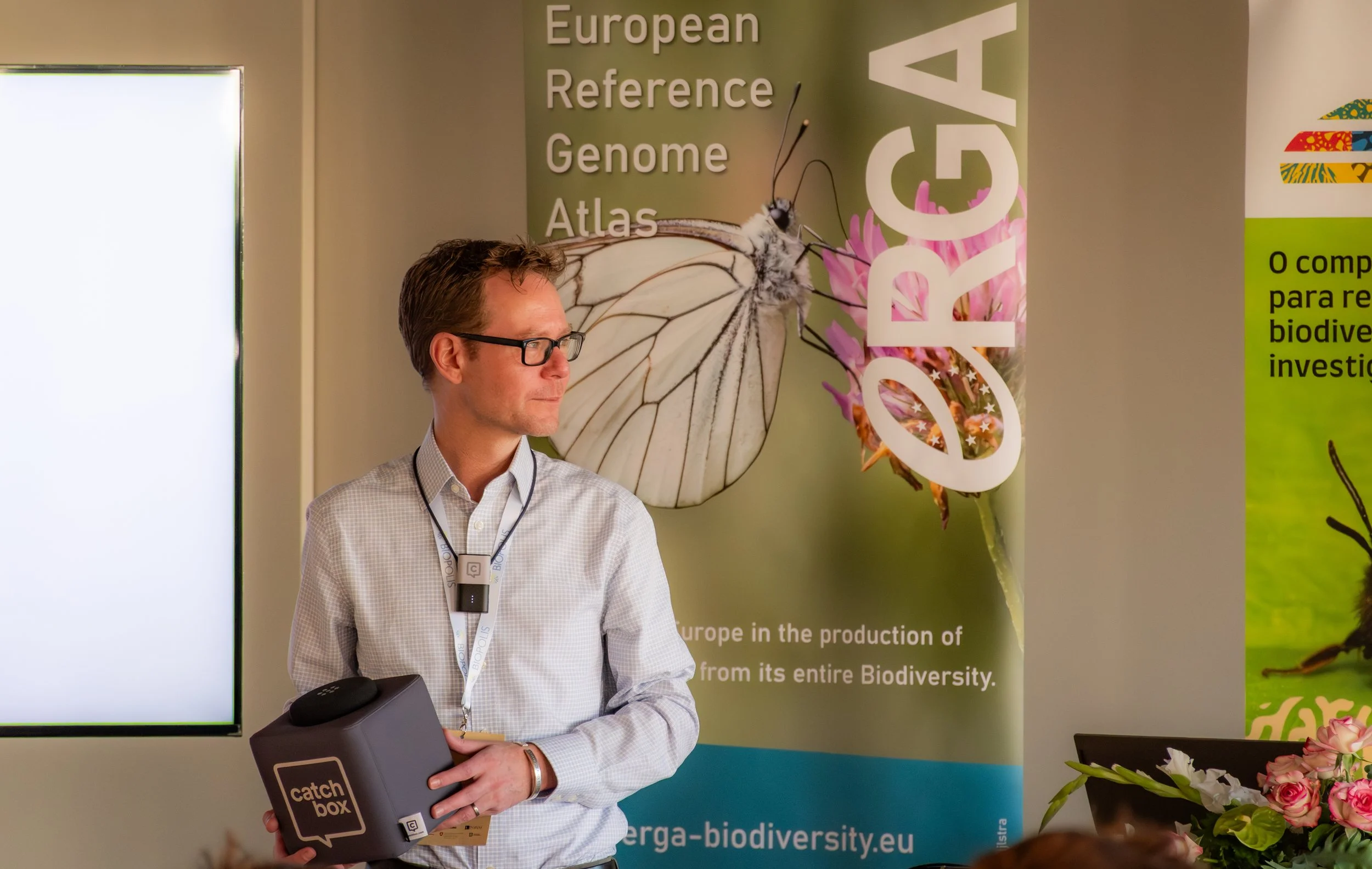
Rob Waterhouse has always been fascinated by life’s many interconnections, from his childhood on an isolated ranch in Swaziland to his current role leading a community of more than 1,000 researchers across Europe. This month, we spotlight the trajectory of the chair of the European Reference Genome Atlas (ERGA), including his first steps and contributions to the emerging world of biodiversity genomics and the power of community-building to spark truly global collaborations.
Out of Africa
Rob lived his first years in Eswatini, a small country in Southern Africa formerly known as Swaziland, where his father managed a cattle farm. He grew up outdoors, surrounded by tropical nature, learning about the countless different species of plants and animals found there, particularly grasses, birds, and insects. “The nearest village was about 45 minutes away from the farm. All our family holidays were also in nature; we would go to the seaside, the countryside, or the mountains. I think all of this definitely influenced my later decision to study something related to biology.”
In 2000, Rob moved to the United Kingdom to study Biochemistry at the University of Oxford. He soon found his first job at the bioinformatics department of a biotechnological company: “Well, I wouldn't call it bioinformatics... My first task was literally holding down the scroll button and watching Sanger sequencing fluorescent peaks, checking the accuracy of the nucleotide sequences and flagging ambiguous peaks. But I kept going back each summer for that job, and I eventually received more interesting tasks, like writing manuals for different software. That was my introduction to bioinformatics.” And it turns out that bioinformatics was just the right field for Rob: “It was very clear from the first year of my undergrad that me and the pipette are never going to be friends. Me and the keyboard, we could be friends!”
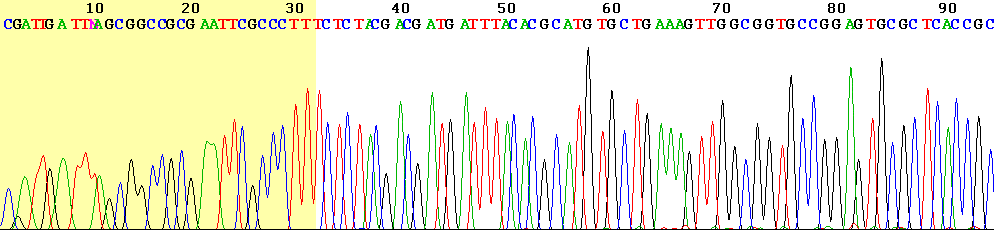
By Loris - en:File:Sanger sequencing read display.gif, Public Domain, https://commons.wikimedia.org/w/index.php?curid=42469778.
In the fourth year of his studies, he joined the group of Laurent Durent at the University of Lyon via the Erasmus exchange programme to work on his first bioinformatics research project, analysing the very first mammal genomes available at the time: “In those early days, we only had the mouse and the human genomes. So I was doing comparative genomics with these two genomes trying to programmatically identify regions that have been lost from one or the other.” There, Rob also learned to code in his first programming language, C++. By the end of that project, he knew that he wanted to pursue his studies in bioinformatics. He was able to realise this ambition through the award of a Wellcome Trust Fellowship to pursue his masters and doctoral degrees at Imperial College London.
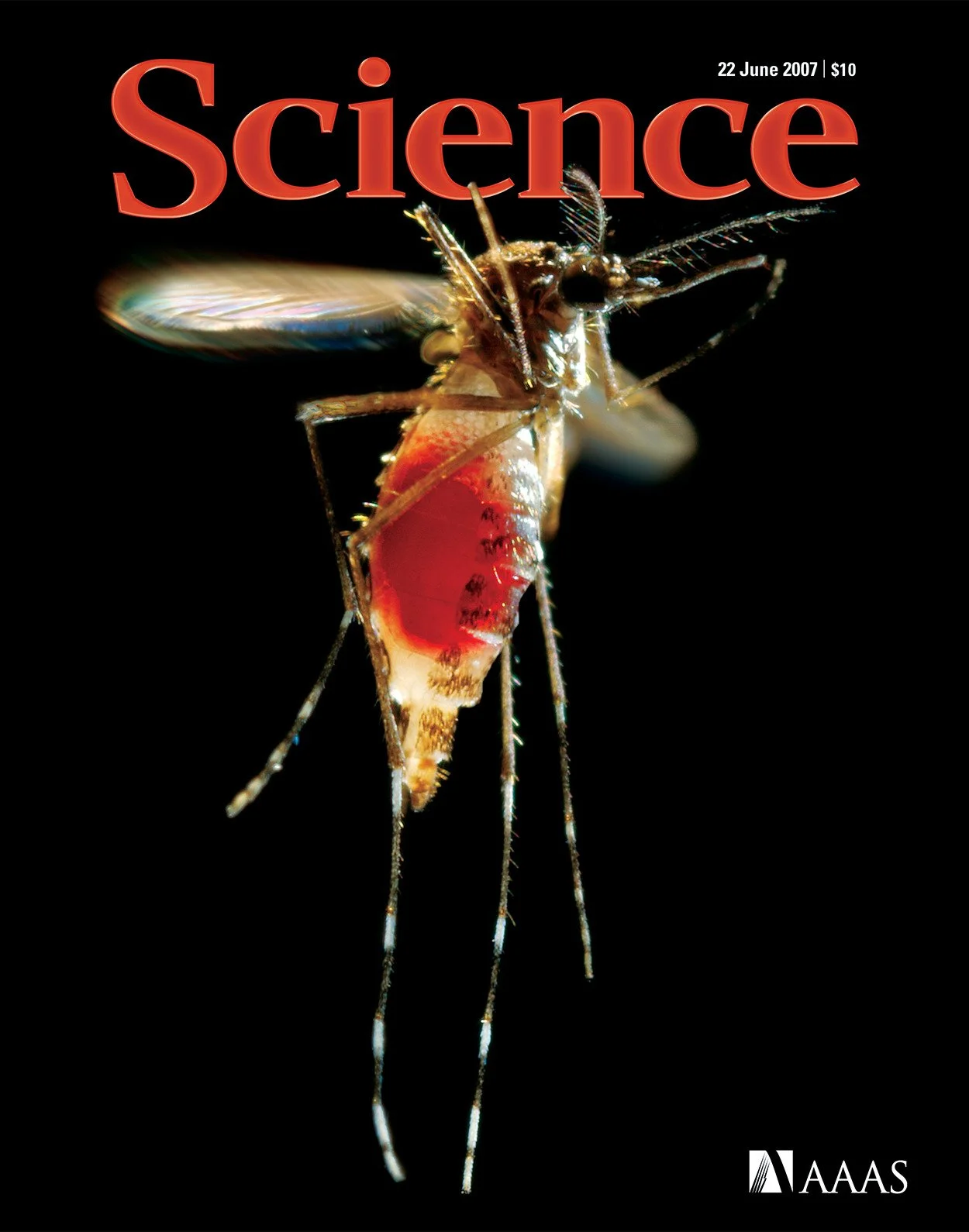
Cover image of the Science issue featuring Rob’s PhD work: Evolutionary Dynamics of Immune-Related Genes and Pathways in Disease-Vector Mosquitoes
The brave new world of Arthropod Genomics
During his PhD, Rob entered the world of arthropod genomics, working on comparative analyses of some of the very first few insect genomes to be sequenced: Anopheles gambiae, Aedes aegypti, and Drosophila melanogaster. Together with his supervisors, Rob coordinated a network of insect immune system specialists, to analyse the joint dataset of annotated genes produced by different research groups. Communication and standardization of methods were essential parts of this work, which culminated in Rob’s first PhD publication in the journal Science. Gradually, Rob saw a community of insect genomics specialists be born and expand, and he became one of the very first members of the nascent i5K Initiative. By attending their yearly conferences, Rob made a lot of contacts and saw the number and diversity of insect genomes grow each year. Scientists would build small consortia to sequence their species of interest while receiving guidance and support from the i5K Initiative and contributing the resources they generated to the growing OrthoDB database, an orthology resource developed by the research group in Geneva where Rob had his first postdoctoral position. “Many lessons learned from my experience at i5K proved extremely useful for my current role at ERGA.”
Another important step in Rob’s career was his role during his postdoc positions in Geneva and at MIT in the development of the datasets of BUSCO genes and the BUSCO assessment tool. BUSCO stands for Benchmarking Universal Single-Copy Orthologs, genes that are highly conserved and found in a single-copy across a wide range of species. The BUSCO package remains one of the most widely used tools for assessing the completeness of genome assemblies in terms of their expected gene content. The development of such a successful tool also proved to be a valuable experience on how to interact with a large community of users, implement their feedback, and keep the databases up to date with a rapidly growing amount of data.
The power of Communities: the ERGA experience
The European Reference Genome Atlas (ERGA), currently recognized as the first Regional Node of the Earth BioGenome Project, emerged in early 2020 as a bottom-up effort from scientists interested in generating reference genomes for European biodiversity:
“It really makes sense that, beyond the taxonomy-driven genome initiatives like i5K and the VGP (Vertebrate Genomes Project), there would also be a need for geographical groups, especially when it comes to securing funding. For me, the motivation at the beginning was this idea that we need to come together to have one voice so that we can improve the possibilities of securing financing for what it is that we want to achieve — more genomes for biodiversity.”
Rob initially joined ERGA as one of the Council representatives for Switzerland, where he has been based for the past 15 years. He then became one of the first Vice-Chairs and, in November 2023, was elected to the role of Chair. One particularly important characteristic of ERGA, in his view, is how community-centered it has been since the beginning: “ERGA goes beyond the model of bringing together big projects. Yes, we want to connect the big projects operating in Europe, but in reality they are already connected to each other through EBP. So in ERGA we have some sort of strengthening of this EBP model, but I think we have a more important role in connecting the smaller groups and individual researchers who would never even think to ask to join the EBP because they are producing one or two genomes, or just getting started with genomics.”
The role of ERGA in addressing regional imbalances, supporting smaller groups and newcomers to the world of genomics is indeed central: “Our community really wants to enable people who, a few years ago, thought genomics wasn’t for them — maybe because it was too complicated, or too expensive, or required too much equipment or training. And now thanks to technology, but also thanks to the ERGA community, to communication and information sharing, to protocol sharing, to having a place to go to ask questions, they are ready to try and generate a genome for their species of interest and answer their scientific questions.”
When asked what the biggest lesson he learned from ERGA was, Rob says: “That if you create a space where people feel comfortable, then suddenly everyone can learn so much more from each other.” And that is the real meaning of a community: ERGA brings together a large group of people from everywhere in Europe united by the common goal of improving genomic resources for the continent’s biodiversity. A mission very well aligned with Rob’s own trajectory.
Written by: Luisa Marins