Sampling & Field Reality
Before the sequencer.
Every genome begins in the field. Here, contributors share on-the-ground realities of collecting biological samples—what’s harder than expected, which organisms still resist best efforts, and why the “first mile” of genome sequencing is often the most challenging.
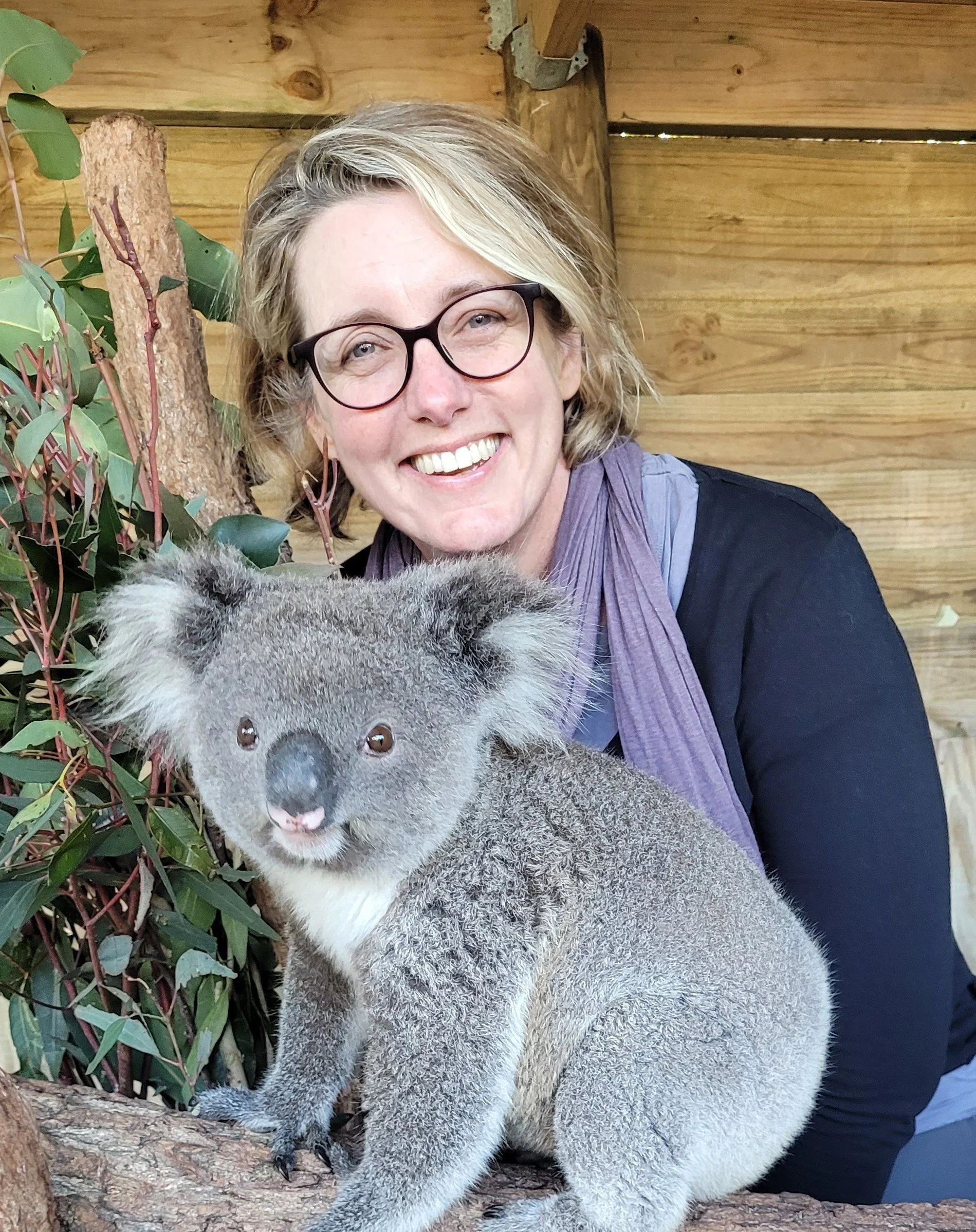
Carolyn Hogg with a sub-adult koala at a captive breeding facility, the team are using known age individuals to determine DNA methylation in the species.
What’s the single most important non-technical barrier to biodiversity genomics in your region?
Carolyn Hogg: Australia is a large continent with a small human population and an estimated 300,000 species. Our ability to obtain fresh samples from the desert regions and other remote areas limits our ability to generate platinum quality genomes for some species. We will always have a sample quality issue due to this.
What field logistics are routinely underestimated?
Andrew J. Crawford: Lack of roads. People who have not experienced the heart of the tropics perhaps imagine that where there are people, there are roads. Not so. In Colombia, there are people everywhere, but the more biodiverse the region (precisely where biologists want to be), the fewer roads. Transportation in Amazonia is by boat. An outsider navigating those rivers, with their frequent portages, may feel like Alfred Russel Wallace charting Colombia’s Rio Negro almost 200 years ago.
The Chocó region on the Pacific Coast of Colombia, through historical neglect by the central government, has just two roads into it, plus one long north–south road (that stops before the famous Darien Gap). Many inland and coastal communities in the Chocó are reachable only by boat or by walking quite a ways. The cost of boat travel is easily underestimated. The price of gas for the outboard motors, so far from any gas station, becomes a major field expense.
The Andes mountains, on the other hand, are criss-crossed with roads, but I am still surprised at the frequency of road closures, especially due to landslides in the wet season, and you might lose a whole day trying to drive around the problem. The poet Burns summed up field work nicely: “The best laid plans of mice and men often go awry,” and all the while, the liquid nitrogen is evaporating away.
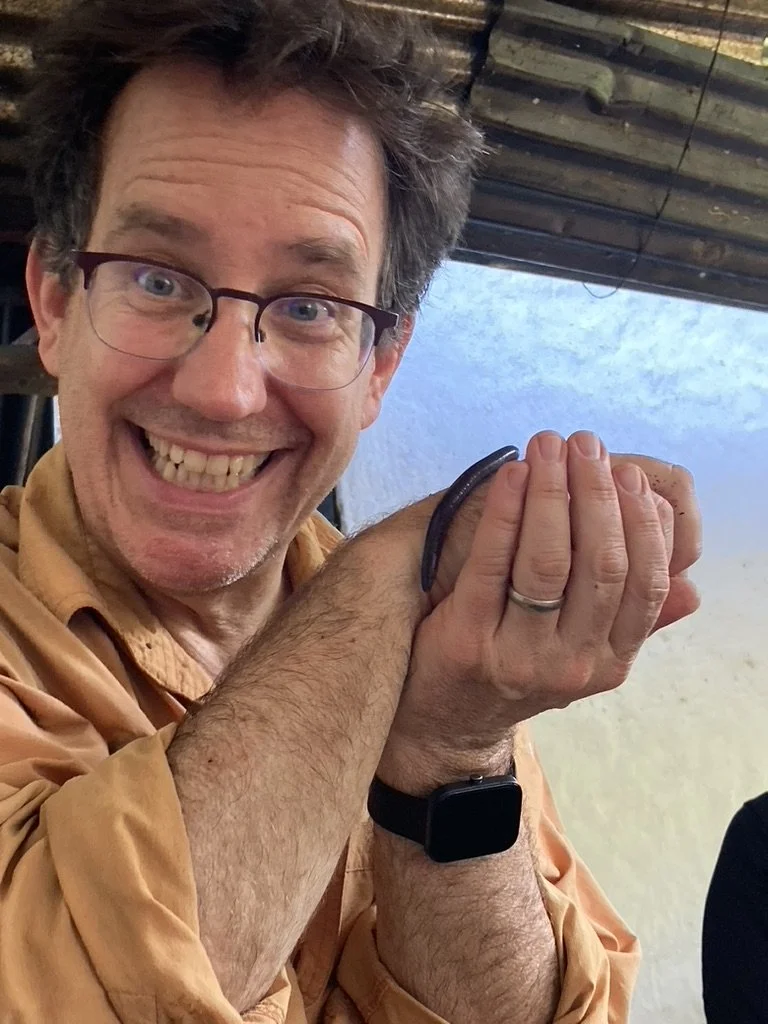
Andrew J. Crawford holding a caecilian, a rarely seen legless amphibian that lives underground, lacks eyes, and uses two tiny sensory tentacles to navigate. Caecilians were the first amphibians to have their genomes sequenced by the Vertebrate Genomes Project. This individual was found near Río Claro in Colombia’s Magdalena River Valley, east of Medellín, and has not yet been genome sequenced.
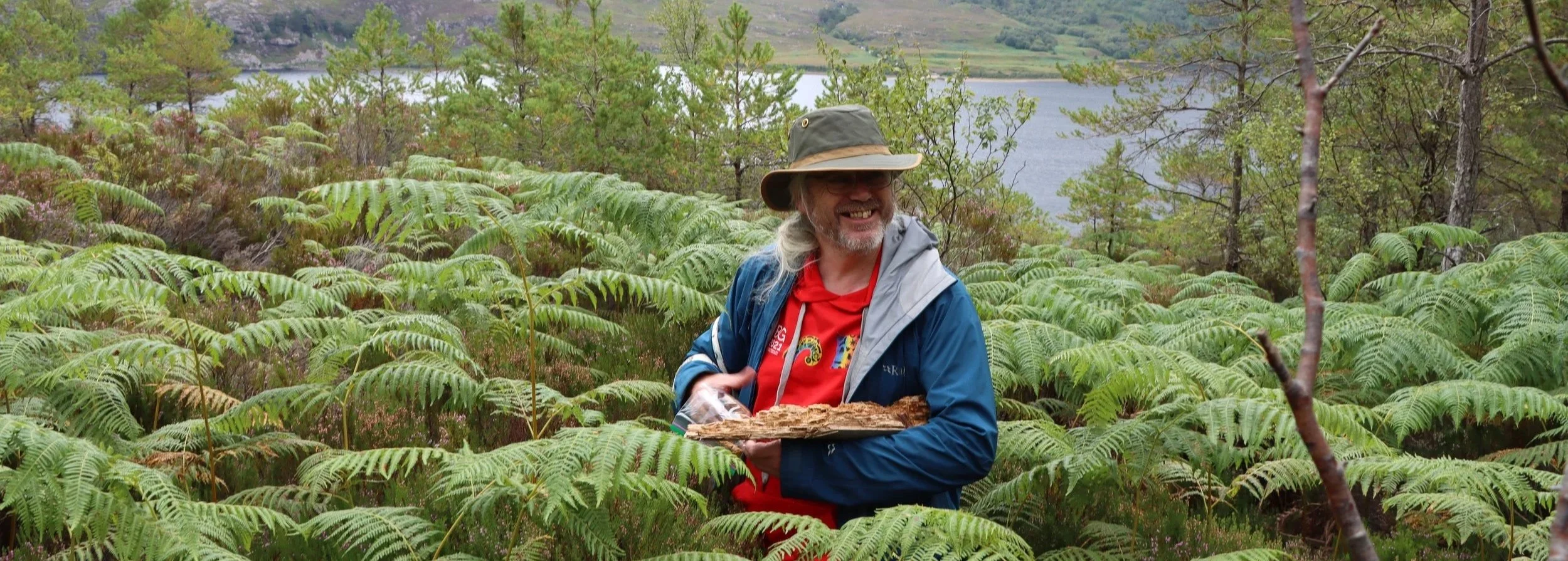
Mark Blaxter, happily lost in a hillside of bracken at Beinn Eighe National Nature Reserve in northern Scotland during a Darwin Tree of Life collection trip—coordinating sampling efforts while searching regenerating Scots pine forest for beetle larvae and the right kind of beetle frass to collect nematodes.
What does everyday or “backyard” sampling reveal about where biodiversity genomics actually begins?
Mark Blaxter: When I took up my post in Tree of Life at the Wellcome Sanger Institute, I moved from sunny but northern Edinburgh to the balmy wilds of Cambridge. It is only 400 miles (600 km) south, but the climate change and the biotic change were striking to me: I was seeing in my back garden all sorts of creatures that were mythical unicorns to me. They were in the standard insect guides for the UK but were restricted to the warmer south, and I had never seen them before. Often they were “common” — but not to me.
I soon started collecting from my garden for the Darwin project, and the garden now has an entry in the Natural History Museum big specimen database for a number of species collected for DToL. As far as I can tell, everyone in DToL collects in their back gardens!