From Vision to Reality: Scaling the Work
Ambition meets constraint.
Turning a global vision into reality requires confronting practical limits. Here, contributors discuss the real-world bottlenecks that shape genome sequencing efforts—from funding and logistics to permitting and prioritization—and how different regions navigate these challenges while working toward shared goals.
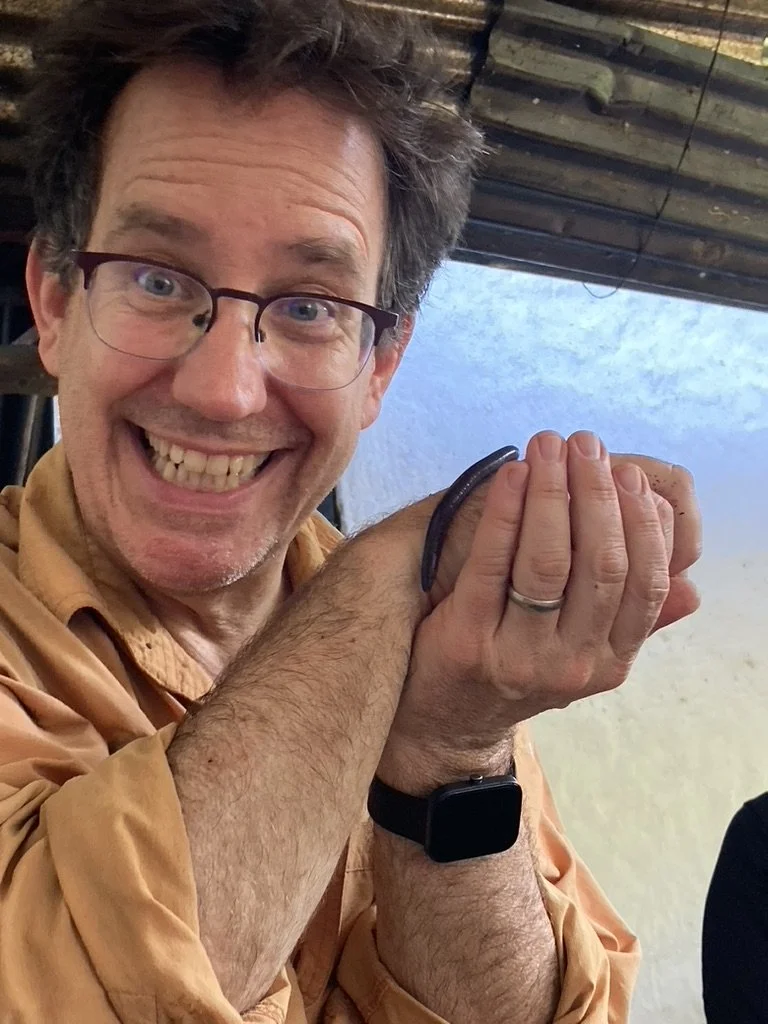
Andrew J. Crawford happily holding a caecilian, one of the legless amphibians so rarely seen that finding one is a moment of real excitement for herpetologists. Living underground, this species lacks eyes and navigates using two tiny sensory tentacles. Caecilians were the first amphibians to have their genomes sequenced by the Vertebrate Genomes Project. This individual was found near Río Claro in Colombia’s Magdalena River Valley, east of Medellín, and has not yet been genome sequenced.
What are the biggest bottlenecks to scaling genome sequencing in your region (e.g., permitting, sample logistics, funding, talent, computing infrastructure)?
Andrew J. Crawford: The obvious bottleneck to scaling up biodiversity genomics is funding, but the situation is more complex in Latin America than the oft-cited “Global North” vs. “Global South” dichotomy. The term “Latin America”hides remarkable economic disparities among countries (not to mention within countries) that should be recognized when planning and executing a global effort such as EBP. Brazil, Mexico, and Chile outpace the other 30 countries in the region by an order of magnitude or more in science funding.
In addition, in countries like Colombia, where I am based, much of the limited science budget goes to more urgent national needs such as human health and sustainability issues like drinking water. This limited funding leads to the second major challenge to biodiversity genomics in the region: genomics infrastructure. Colombia, for example, as a whole has no PacBio machines, about half a dozen Illumina machines, but a growing number of Oxford Nanopore machines (currently >12). Worse yet, sequencing prices are roughly 40% higher in Colombia than in the US for the same service, due to more costly technical support and reagents. Thus, whole-genome sequencing outside the country is often necessary, but this brings additional logistical challenges and permitting paperwork.
However, Colombia does have some advantages. First, Colombia produces exceptional human talent in genomics and biodiversity informatics, with some remaining in-country and many relocating abroad. Second, collecting permits for biodiversity are largely a solved issue. Obtaining samples for genomics from Indigenous and Afrocolombian lands, however, requires local approval, a concept built into Colombia’s Political Constitution of 1991, and is best accomplished by first building working relationships based on mutual trust. Such relationships may take years, not months, for a given project in a given community and are not immediately amenable to “scaling up.”
For all these reasons, the final frontier for biodiversity genomics may well be western Amazonia, the most biodiverse region in the world.
What’s something the public still misunderstands about genome sequencing?
Rob Waterhouse: One key aspect the public still misunderstands about genome sequencing is the idea that generating a genome is quick, definitive, and “finished.” Many imagine it as pressing a button to read an organism’s DNA once and for all. In reality, producing a genome can be a long, iterative process. It involves careful specimen collection and identification, high-quality DNA extraction, multiple sequencing technologies, complex assembly and error correction, and extensive annotation.
Another common misunderstanding is that a genome is a complete blueprint that directly explains an organism’s behavior, appearance, or value to humans. A genome provides essential information, but understanding how genes function requires integration with ecological, developmental, and environmental data. Sequencing does not automatically reveal “what a species does” or “how to save it”; however, a reference genome is the foundation on which to build the knowledge and evidence required to better characterise the biology of species and populations, helping to protect and restore life on Earth.
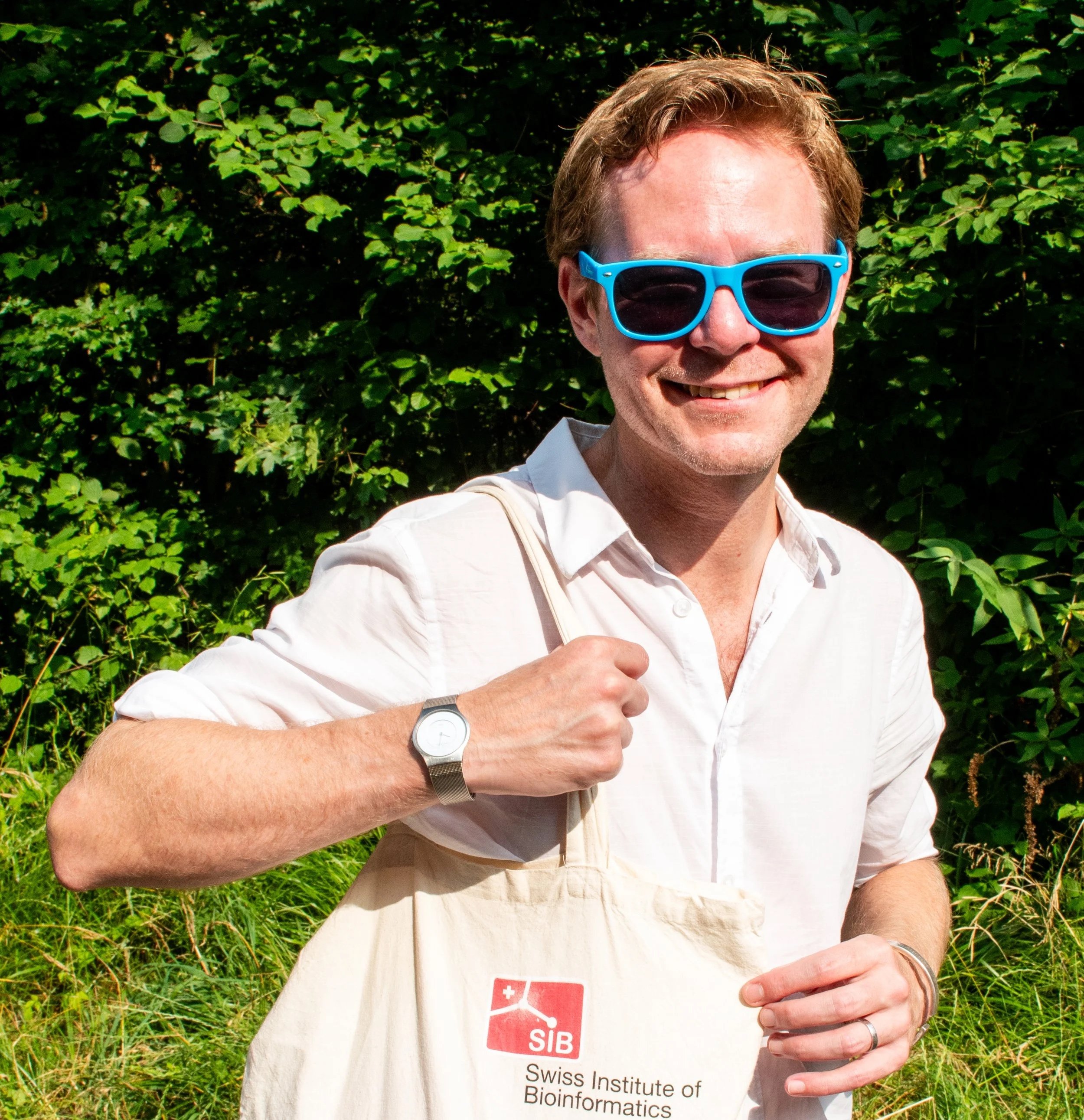
Rob Waterhouse sampling Lopinga achine (the woodland brown butterfly) in the Canton of Valais, Switzerland, as part of efforts to generate high-quality reference genomes for European biodiversity.
How do you plan to prioritize species if budget limits arise?
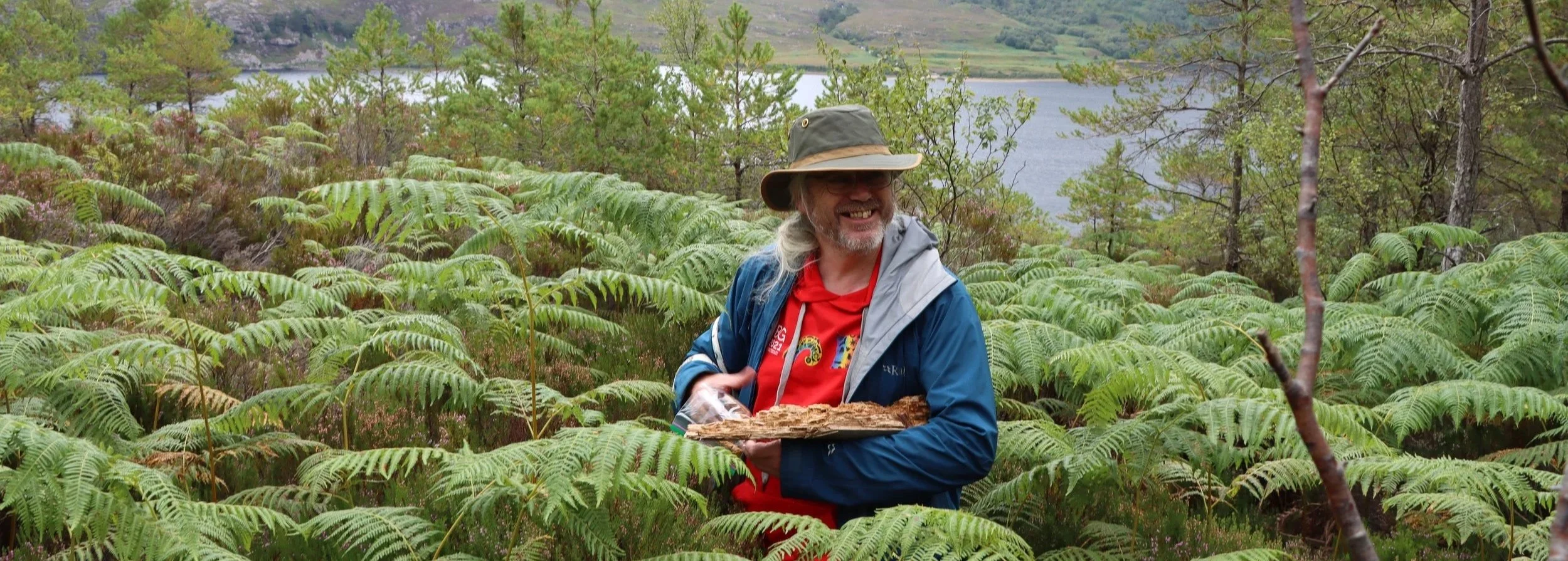
Mark Blaxter, happily lost in a hillside of bracken at Beinn Eighe National Nature Reserve in northern Scotland during a Darwin Tree of Life collection trip—coordinating sampling efforts while searching regenerating Scots pine forest for beetle larvae and the right kind of beetle frass to collect nematodes.
Mark Blaxter: Budgets are always tight in science, and it is important in a project like the EBP that we demonstrate as early as we can the inherent value of the reference genomes we produce, so that we can make the argument for additional funding for the next wave of sequencing.
In the Darwin Tree of Life project, we have had a wide brief—sequencing all of the eukaryotic biota of Ireland and Britain—and thus have initially aimed to sequence for diversity, selecting species to represent their taxonomic Families. There are representatives of over 4,000 Families living on or in the seas around our islands, so this was not a huge constraint on our collecting and sequencing.
However, to show the value of the work, we also select species that are iconic (i.e. widely known or appreciated, and for which a genome sequence could be part of a strong story for the general public), important (i.e. key players in ecosystems, major agricultural weeds or pests, or sources of useful products), or interesting (a catch-all that allows us to support graduate student projects by delivering the genome of their study species, or to provide pre-application data to researchers applying for “post-genomic” grants).
Together, diversity plus the three “I”s gives us the balance between blue-skies discovery and engaged delivery we need to make the project successful for a wide range of stakeholders.
How do we ensure equity for regions with high biodiversity but low funding?
Andrew J. Crawford: I feel this historical asymmetry every single day. In Colombia, I am surrounded by unparalleled biodiversity, with a taxonomic inventory still woefully incomplete. I am blessed to work every semester with many capable students eager to contribute to biodiversity genomics within their country. Much of the country is opening up to new biological exploration. Permits have never been easier.
All this, yet self-determination in biodiversity genomics eludes Colombia. I feel almost dishonest training Colombian students to assemble genomes when funding to pursue their own innovative genomics projects, based on their own national biodiversity, is so extremely limited. Just as Colombian scientists from the big cities need to form relationships based on mutual trust and shared interests with people in Indigenous and Afrocolombian territories (as set out in the 1991 Constitution), so too labs in wealthier countries need to develop healthy relationships and real collaborations with people in megadiverse tropical countries. We cannot scale up biodiversity genomics without both parties at the table.
While PIC and MAT are necessary, traditional ABS negotiations often involve a “user” who needs sample X and a “provider” who sets terms for granting access. We can flip this paradigm and imagine co-creators of knowledge, where one party needs access to sample X while the other needs access to infrastructure and resources to generate genomic data from Y. Lower- and middle-income countries (LMICs) like Colombia can identify their own needs in biodiversity genomics and create proposals in partnership with wealthier countries and their granting agencies. Increasing partnerships that start with co-creation will, I suspect, alleviate much of the friction around ABS and data sovereignty, because mutual understanding is baked into the project from the start.
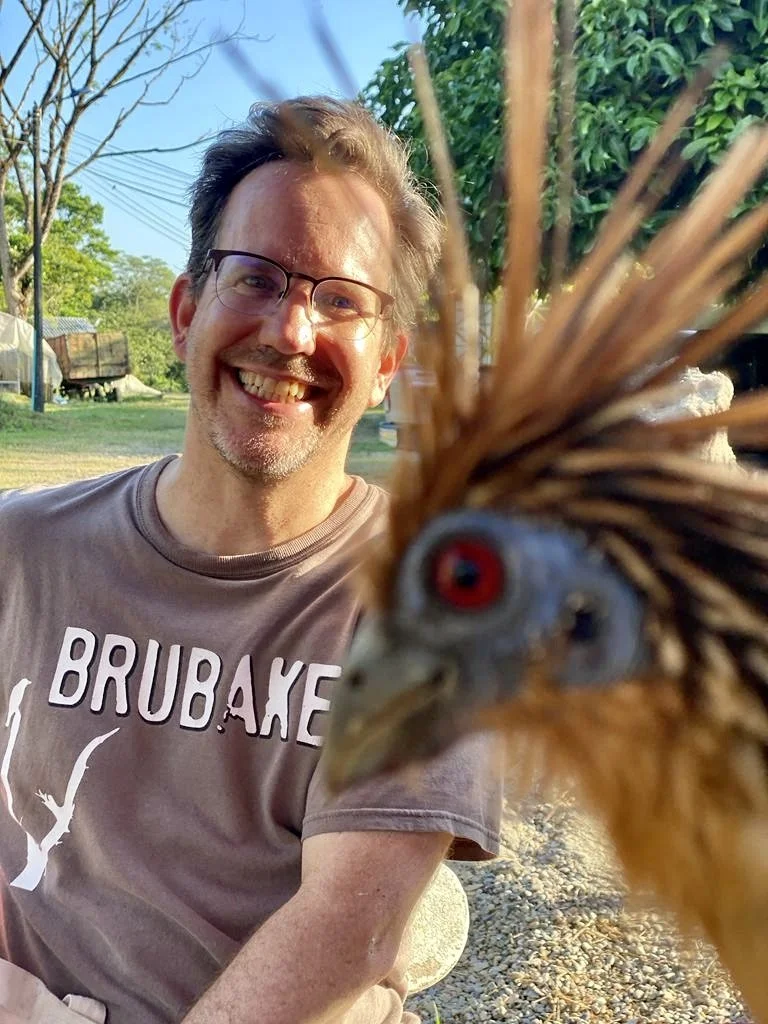
Andrew J. Crawford with a hoatzin (Opisthocomus hoazin), a truly unique bird and the sole member of its genus, family, and order. Hoatzins eat leaves and use foregut fermentation — a rare, ruminant-like digestive strategy in birds. As juveniles, they have a small claw on each wing.
This hoatzin genome was assembled by the Vertebrate Genomes Laboratory for the Vertebrate Genomes Project. The individual shown was sampled near Villavicencio in the Andean foothills of eastern Colombia.