
The role of global collaboration
The hardest genomes are solved through collaboration. As biodiversity genomics expands across the Tree of Life, researchers increasingly rely on shared expertise, new technologies, and global partnerships. Together, these collaborations turn individual breakthroughs into methods that benefit thousands of species yet to be sequenced.
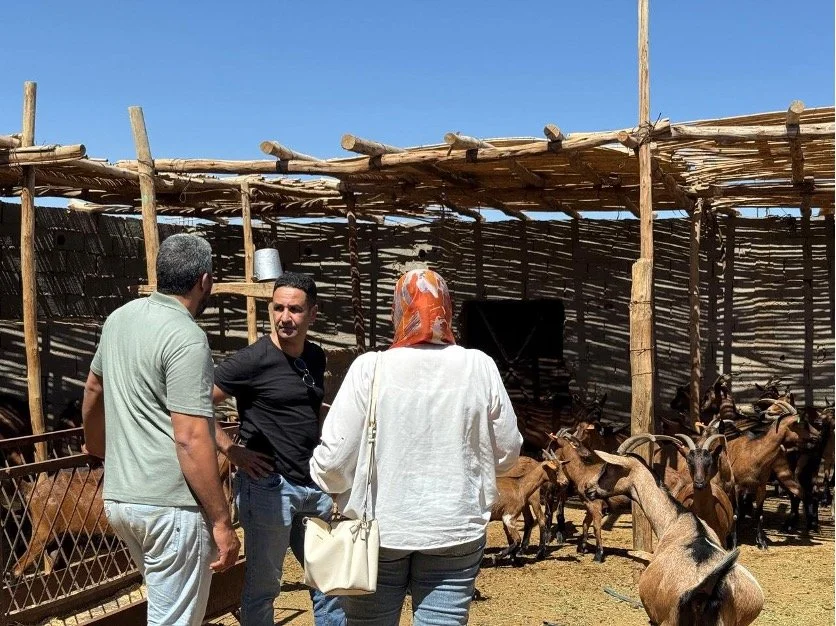
Bouabid Badaoui on a field visit to local goat systems in southern Morocco, discussing sampling strategies with breeders and team members. Community engagement and local expertise are central to the Africa BioGenome Project’s approach.
What has the EBP network enabled that would be difficult — or impossible — to achieve alone?
Bouabid Badaoui: The Earth BioGenome Project has fundamentally changed what is possible by connecting expertise, infrastructure, and vision across continents.
In Africa, through the Africa BioGenome Project, we are working to generate genomic resources for species that are ecologically, economically, and culturally essential, yet historically underrepresented in global genomics efforts. Our work on camel and goat genomes in desert regions is a clear example: it combines local knowledge, field access, and emerging sequencing technologies.
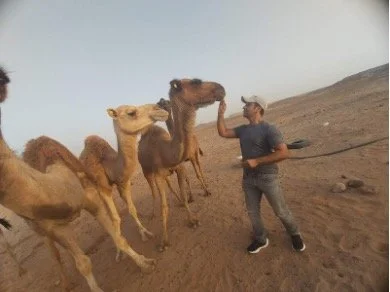
Bouabid Badaoui interacting with camels during fieldwork in southern Morocco, illustrating the integration of traditional husbandry knowledge and scientific sampling in arid ecosystems.
This type of work cannot be done in isolation. It requires coordination between field teams, sequencing platforms, bioinformatics expertise, and international collaborators. The EBP network enables this integration, allowing us to move from isolated efforts to a coherent global strategy.
"Africa is not only a source of biodiversity — it is a driver of innovation in how we study and understand life in extreme environments."
More importantly, it ensures that Africa is not only a source of biodiversity but also a driver of innovation in how we study and understand life in extreme environments.
Have collaborations ever unlocked a genome that felt impossible to tackle within a single lab?
Have collaborations ever unlocked a genome that felt impossible to tackle within a single lab?
Kamil Jaron: In the past, any genome was impossible to tackle within a single lab simply because of resources and expertise was needed to make one, so collaboration was truly essential. Today, that bottleneck has shifted. Individual genomes are routinely generated within labs, but what still feels impossible without collaboration is producing high-quality genomes across thousands of species.
The scaled-up genome production we do at the Tree of Life programme depends heavily on collaboration — particularly for sample acquisition and sometimes for interpreting genomes we need taxonomic experts. In that sense, collaboration no longer unlocks individual genomes, but makes large-scale, systematic sequencing possible.
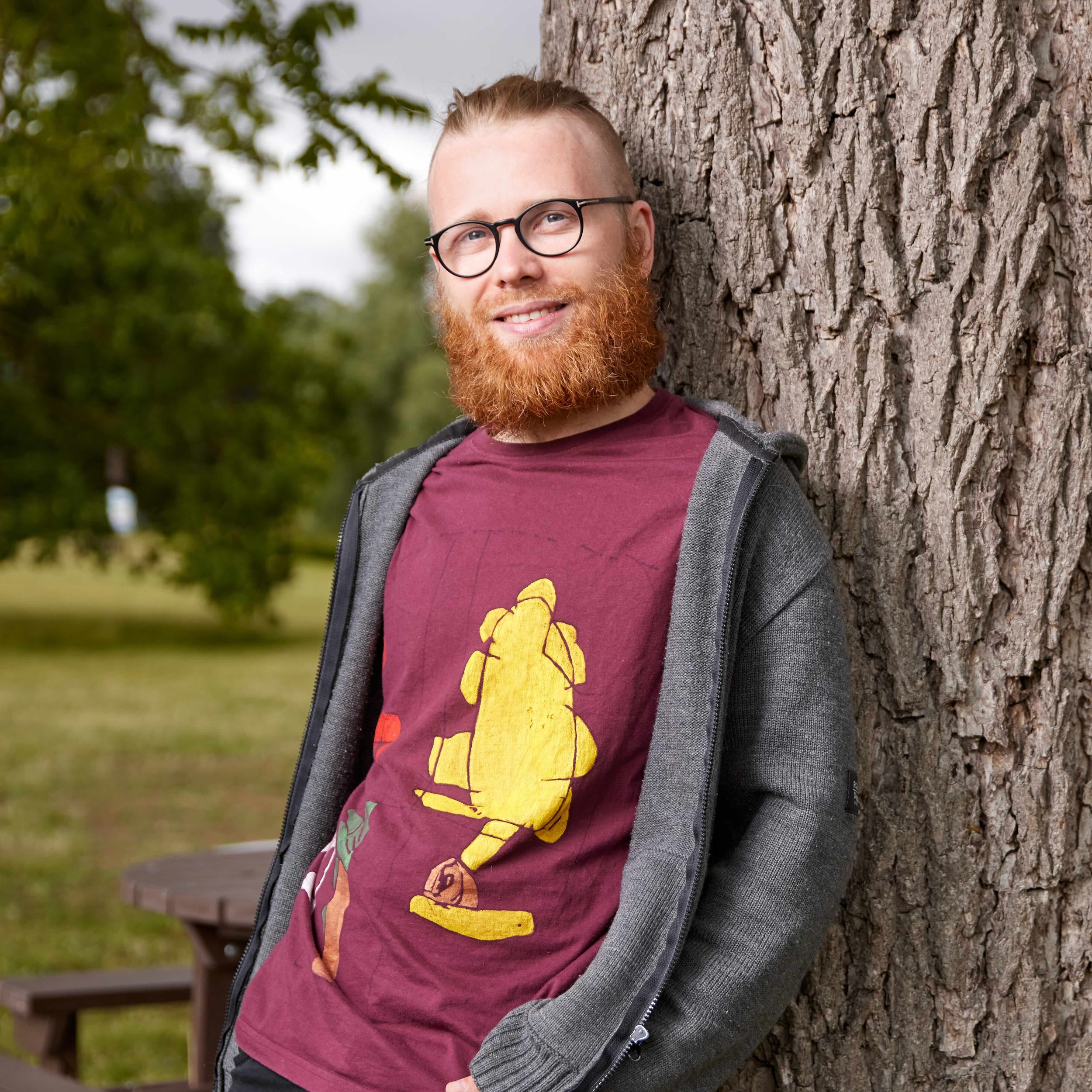
Kamil Jaron is a Group Leader in the Tree of Life Programme at the Wellcome Sanger Institute. His research explores how reproduction shapes genome evolution, with a particular focus on flies (Diptera) and springtails (Collembola).
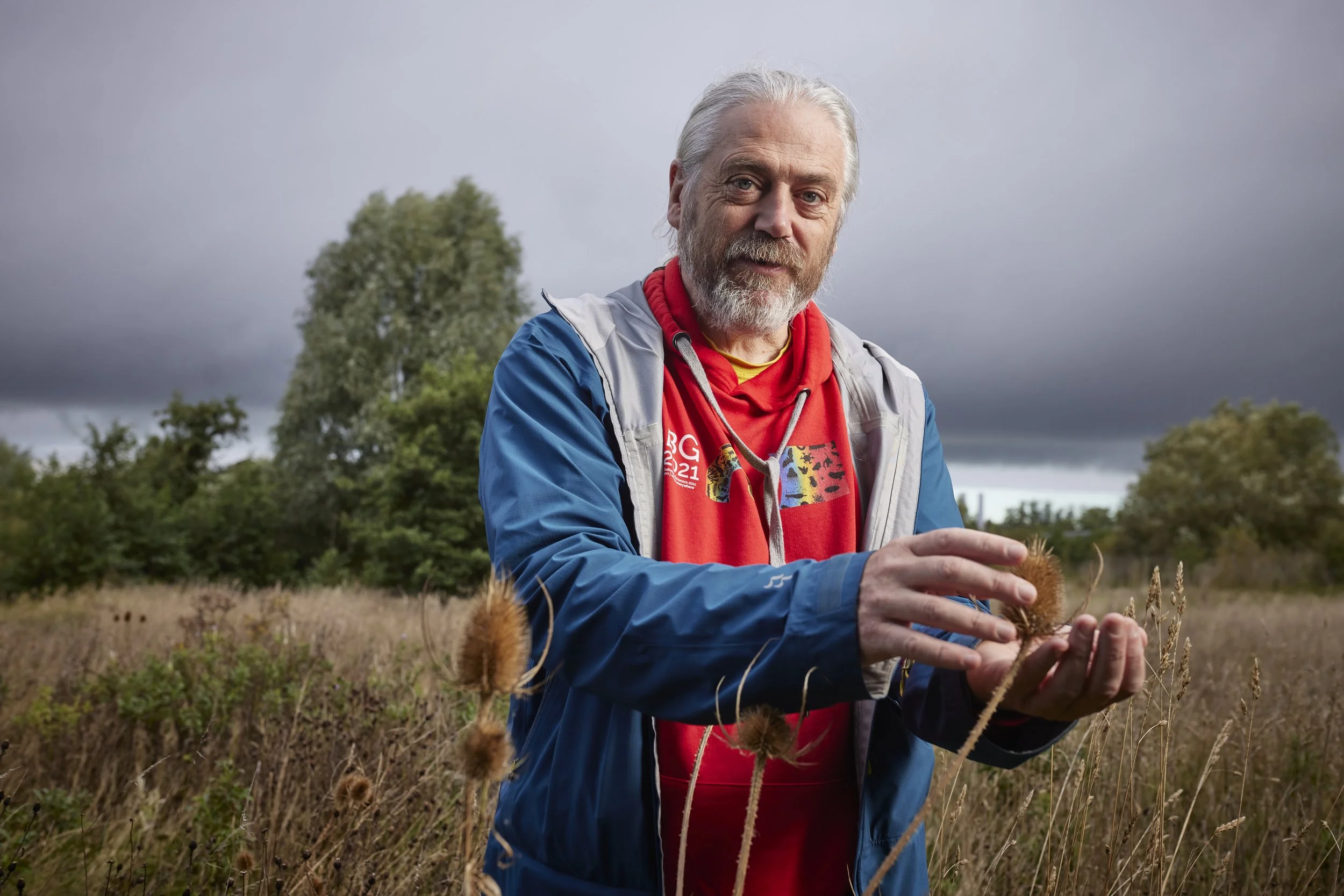
Mark Blaxter samples a teasel head for spiders and earwigs in the wetlands beside the Wellcome Sanger Institute.
Why invest in solving the hardest genomes at all — and what becomes possible when we do?
Mark Blaxter: It is important to realise that we are only beginning the journey towards sequencing all life. While we have sequenced several thousand species, there are over a million still to do. Each genome is its own story, but the solution is likely to be applicable across many, many more. The "hard genomes" often simply represent the first time we have approached a particular branch of the tree of eukaryotes: solving one makes it likely that we can solve them all. Just five years ago, very few of us believed that reference genome sequencing at scale was possible—every genome was difficult, requiring years of work and major investment. As we near the end of EBP Phase I, we have shown that sequencing at scale is possible, and embedding these successes in tens of centres worldwide will help deliver the greater goal of sequencing all of life.
How do permitting requirements shape which species can realistically be sequenced?
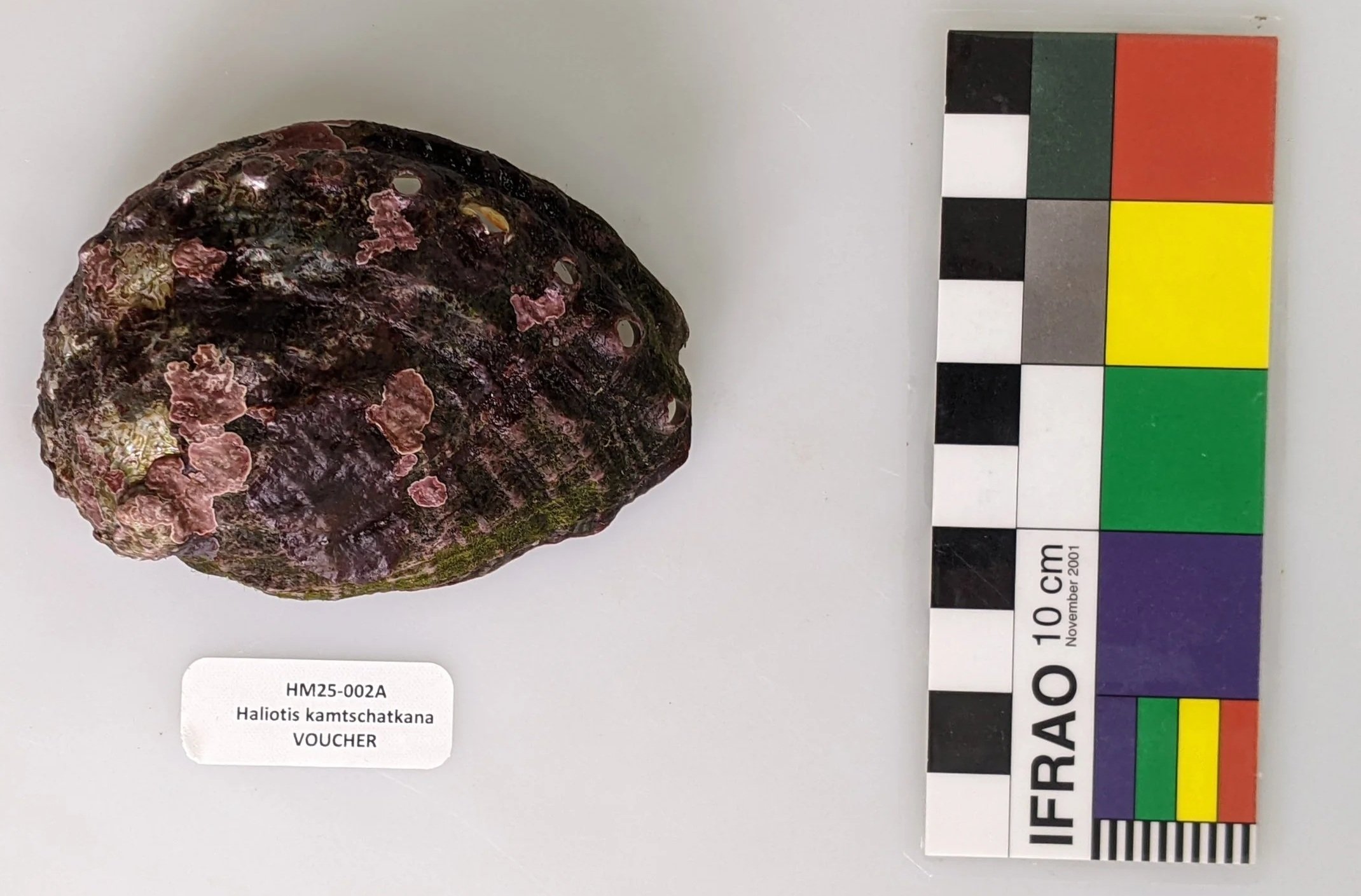
Hugh MacIntosh: Over the last year and a half, I have collected roughly 50 mollusc samples from the coast of British Columbia for reference genome generation by the Canadian BioGenome Project, but the Northern Abalone (Haliotis kamtschatkana) was certainly the most complicated permitting process.
Permitting is in place for good reason! Even with the best of intentions and scientific value, we don't want people sampling species at risk willy-nilly. The main constraint encountered was dealing with the Species at Risk Act (SARA) permitting process, which needs to be completed regardless of the scope of collecting.
SARA is especially concerned with the impact any work might have on the species. It's important to demonstrate that specimens will be collected humanely and the population will be minimally impacted.
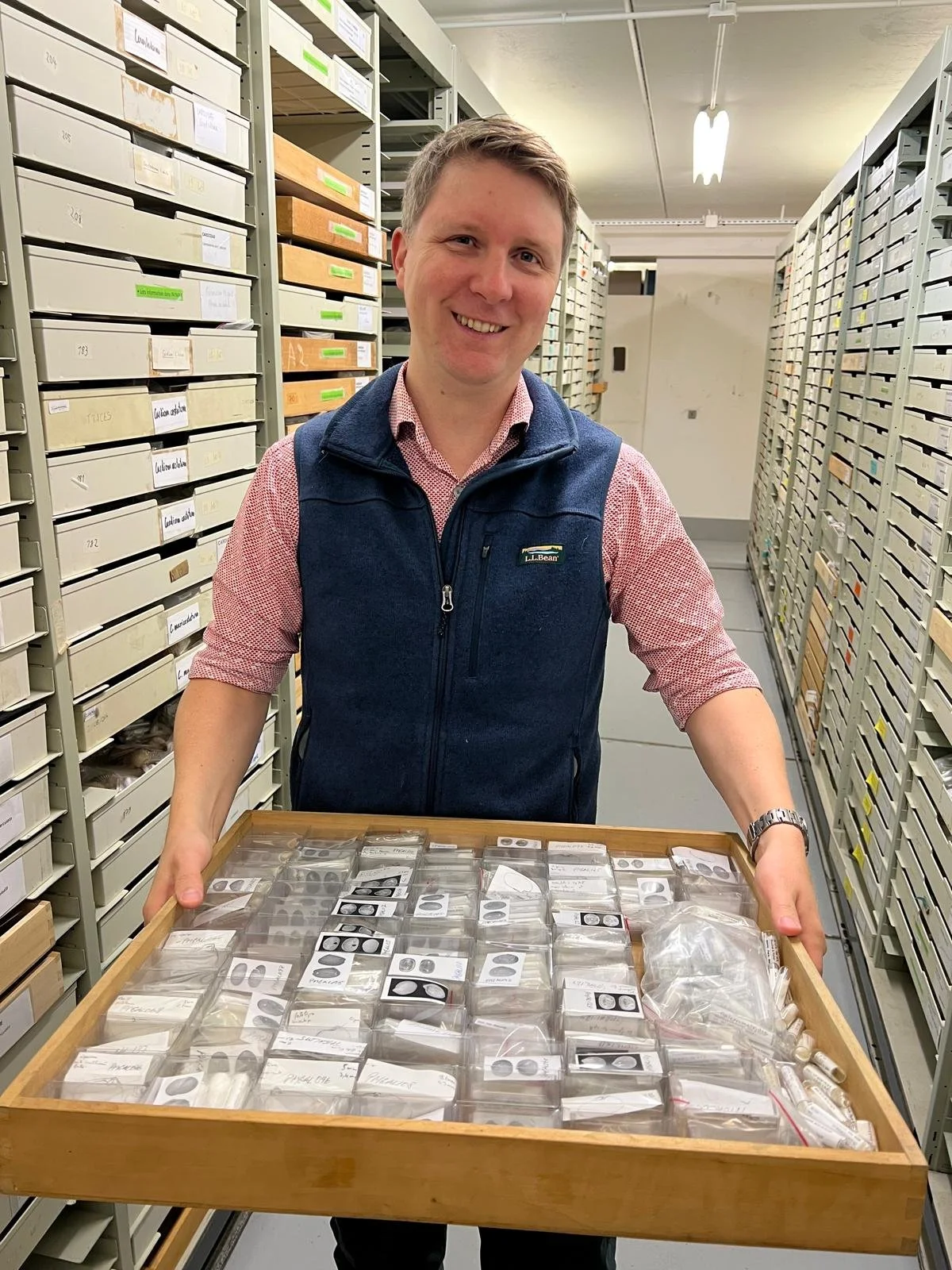
Hugh MacIntosh with a tray of mollusc specimens from the Royal BC Museum collections.
The Northern Abalone (Haliotis kamtschatkana) is an important but threatened species in the coastal ecosystems of British Columbia and holds cultural significance to Indigenous communities. We were confident we would be successful in our application, but we provided as many sources of support as possible. As we proposed sampling in Barkley Sound, we received letters of support from the Huu-ay-aht First Nation and Bamfield Marine Sciences Centre, who both see value in understanding the genome of this important species.
Fortunately for us, Reef Life Survey conducted underwater biodiversity surveys in Barkley Sound from 2021–2023, providing us with a timely picture of Northern Abalone abundance in the area. We were able to use those counts to show there is a healthy population, with divers encountering an abalone on average every 18 metres. We were only looking to sample two abalone, so the impact was minimal.
We were successful in our application and sampling, but if we did not have community support and good data to back up our application, I would not have been surprised if our application had been denied. Technical feasibility alone is not always enough. Access to species can depend heavily on permitting requirements, available population data, and support from local communities and stakeholders.
Northern Abalone is not only protected in Canada, but has also been assessed as Endangered, with a decreasing population trend, on the IUCN Red List. Although the species ranges from southern Alaska to Baja California, its conservation is an international concern, not just a Canadian one.