
Ethics, Equity & Trust
Genomics with responsibility.
Genome sequencing does not happen in a vacuum. These reflections explore how EBP-affiliated projects engage ethically with communities, respect sovereignty, and ensure that benefits from genomic data flow back to the people and places connected to the biodiversity being studied. As genome sequencing scales globally, trust, reciprocity, and responsible stewardship remain central to this work.
What are the ethical responsibilities as genomics scales globally?
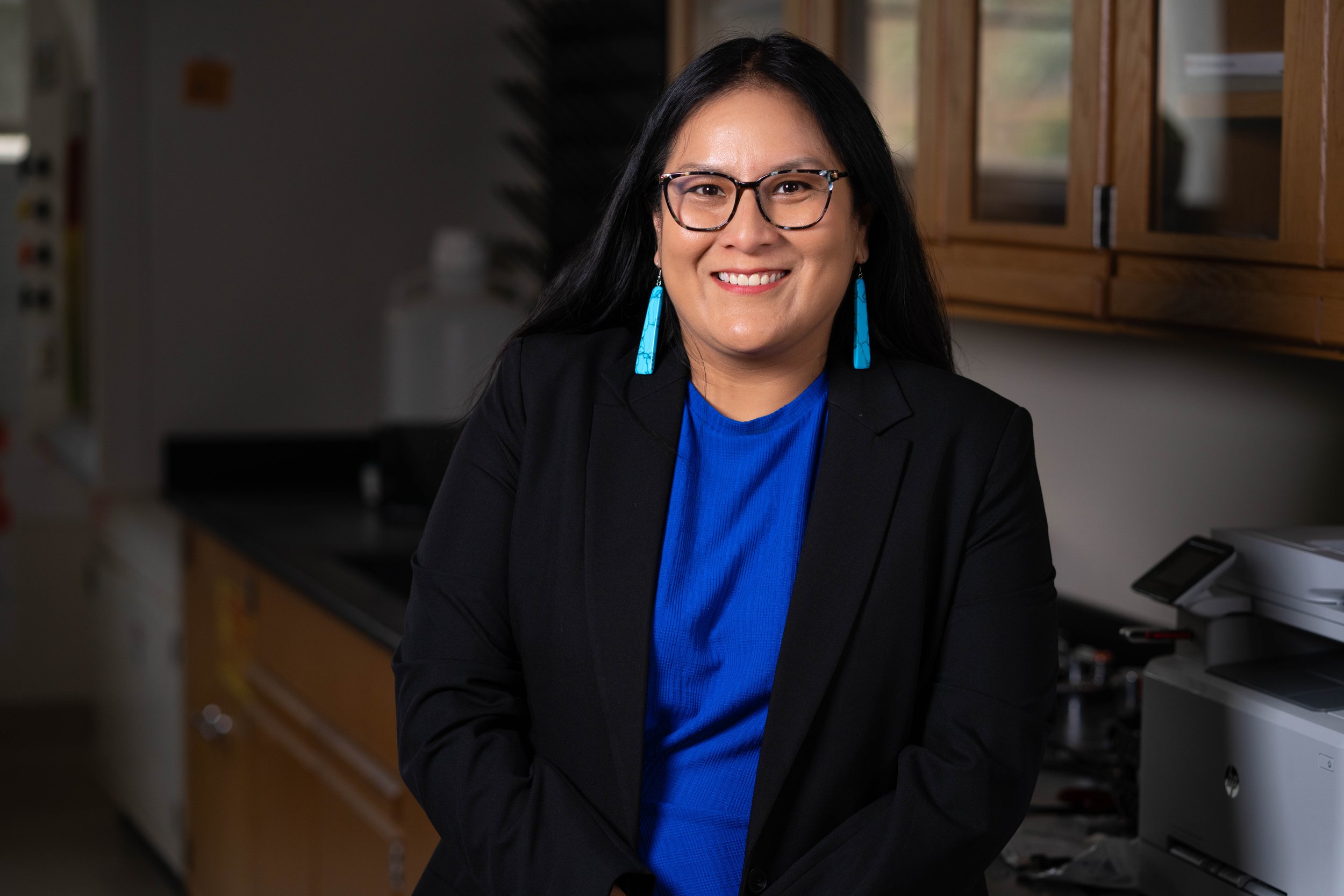
Dr. Krystal Tsosie in the Tsosie Lab at ASU’s main campus. Photo courtesy of Joshua Tso / Tsosie Lab.
Krystal Tsosie: Modern biodiversity science didn’t emerge in a vacuum. Museums, biocollections, and genomics were built through discovery—often conducted on Indigenous lands—without the governance structures we now recognize as essential. The opportunity today isn’t to halt discovery, but to evolve it: to pair exploration with accountability, reciprocity, and trust.
What has changed most dramatically is scale. Samples are finite and projects are temporary, but genome sequences persist. They circulate, are reused, and accumulate value over time. This shift—from finite samples to long-lived genomic infrastructure—is why genomics now raises new stewardship questions. As genome reads become longer and more complete, the lifespan and influence of those sequences extend far beyond the moment of sequencing.
What this reveals is that technical properties and social implications scale together. Long-read genomics doesn’t just improve resolution; it increases durability, reuse, and downstream impact. As sequences persist across databases and applications, the depth of governance—and the relationships they require—must also deepen.
That’s why long reads require long relationships.
How do you ensure data benefits flow back to local communities, including Indigenous partners?
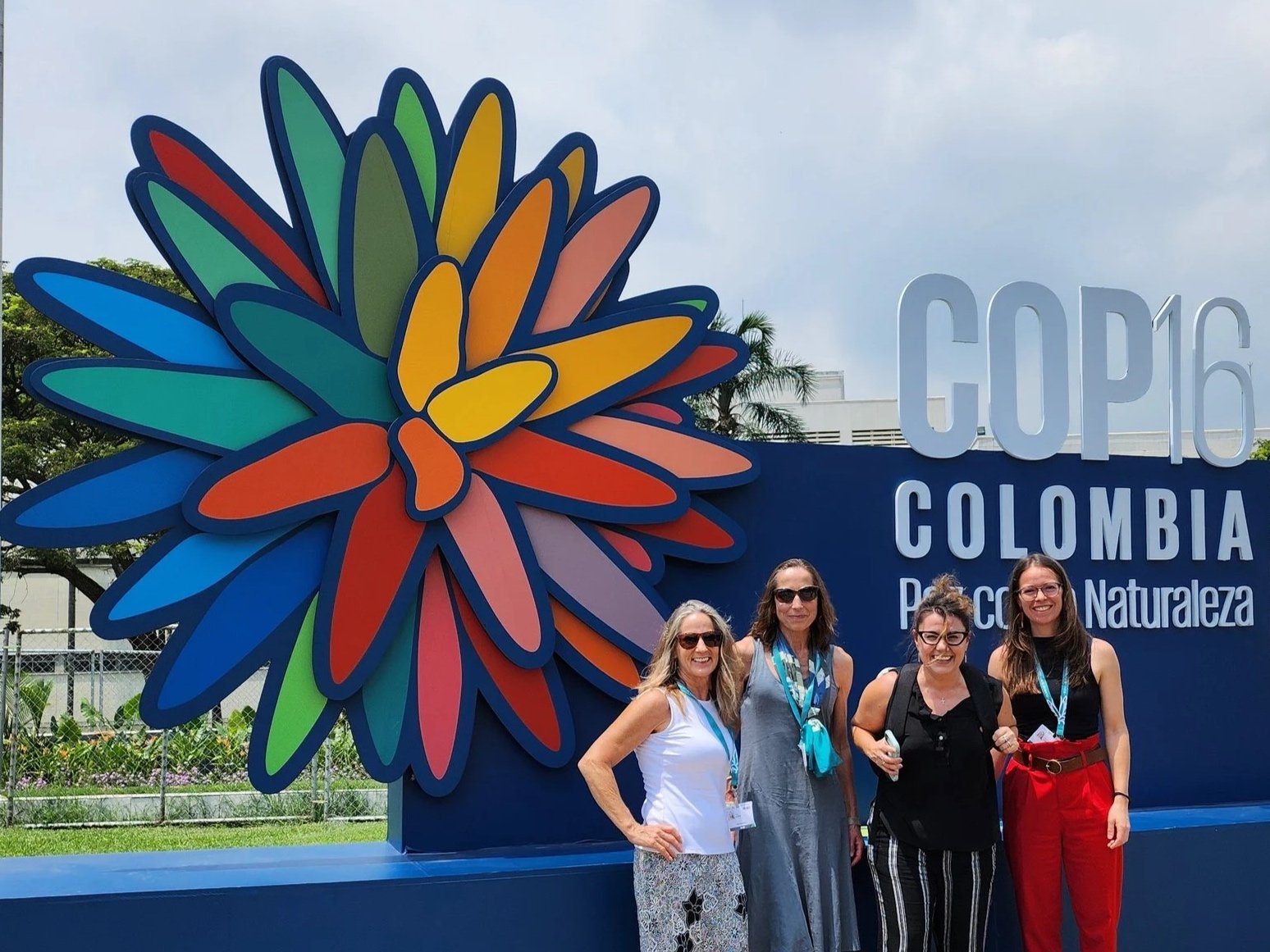
Ann Pace and Wise Ancestors teammates Wendy Bussiere (Administrative Specialist), Federica Di Palma (Scientific Advisor), and Solenne Correard (Director of Genomics) went to COP16 (Cali, Colombia, 2025) to discuss the importance of uniting community engagement and genomic technologies in the design of conservation strategies–ensuring that Wise Ancestors is leading the way in rolling out this innovative approach to biodiversity conservation.
Ann Pace: There are several practices that project developers should be mindful of to ensure that benefit, and not only benefit from data, flows back to local communities and Indigenous partners. Most importantly, any benefit defined by researchers without consultation is performative and unlikely to actually confer benefit. The key is to start thinking about and discussing the benefit early, during the planning stages of the project, with the relevant communities. Ethical engagement practices include discussions about traditional stewardship practices, and potential harms of proposed research alongside potential benefits of genomics approaches to species conservation. Community partners need to be respected as biodiversity stewards and given decision-making authority on whether a project should move forward and what the benefit to their community should be.
Another critical practice is to ensure that a thorough conversation is had with the community regarding what type of data and samples would be generated by the project, and how they would like those resources to be stored and utilized. Much of that information can be appended as metadata to the data and samples. The Local Contexts Labels and Noticesprovides one example of a data annotation framework that centers community preferences for informing data users about considerations when interacting with data. It is also very important to adhere to national and local regulations and guidelines, which may require navigating the relationship between governments and specific communities, to ensure that existing agreements are followed.
What considerations are shaping how genomics is evolving as a long-term scientific resource?
Krystal Tsosie: We’re at a real inflection point. Long-read sequencing is transforming genomes from project-specific outputs into durable research infrastructure that anchors entire lines of inquiry. At the same time, genomic data now power AI, modeling, and transdisciplinary science at scale. Universities are where these forces converge—and where they must be intentionally integrated.
At ASU, this work is already underway across sequencing, biocollections, data systems, and governance. From a research leadership perspective, biodiversity genomics is becoming global infrastructure. How that infrastructure is built matters.
Indigenous sovereignty strengthens genomic science because it improves how sequences enter, move through, and persist across data pipelines over time. It’s not a restriction on analysis or reuse—it provides clarity around consent, provenance, and reuse conditions. For long-read reference genomes, that clarity preserves context, maintains traceability, and supports more reliable downstream modeling and AI-driven analysis. The result is genomic data that remain interpretable and usable as methods evolve.
What this work shows is that it starts upstream. At ASU, sequence stewardship is being designed before large-scale sequencing and AI deployment—at the level of collections, metadata, and governance. Across my lab and the Biodiversity Knowledge Integration Center, governance-aware metadata are embedded so context and consent travel with data over time. This upstream work is what makes future genomics and AI trustworthy and sustainable.
These questions are especially relevant for large-scale efforts like the Earth BioGenome Project, where reference genomes are designed for global reuse over decades. What’s encouraging is that better models already exist. These approaches partner with Indigenous communities from the outset, co-create governance for reference genomes, and use Indigenous-led data infrastructure to ensure metadata and reuse expectations travel with the data. This produces clearer consent and more durable genomic resources.
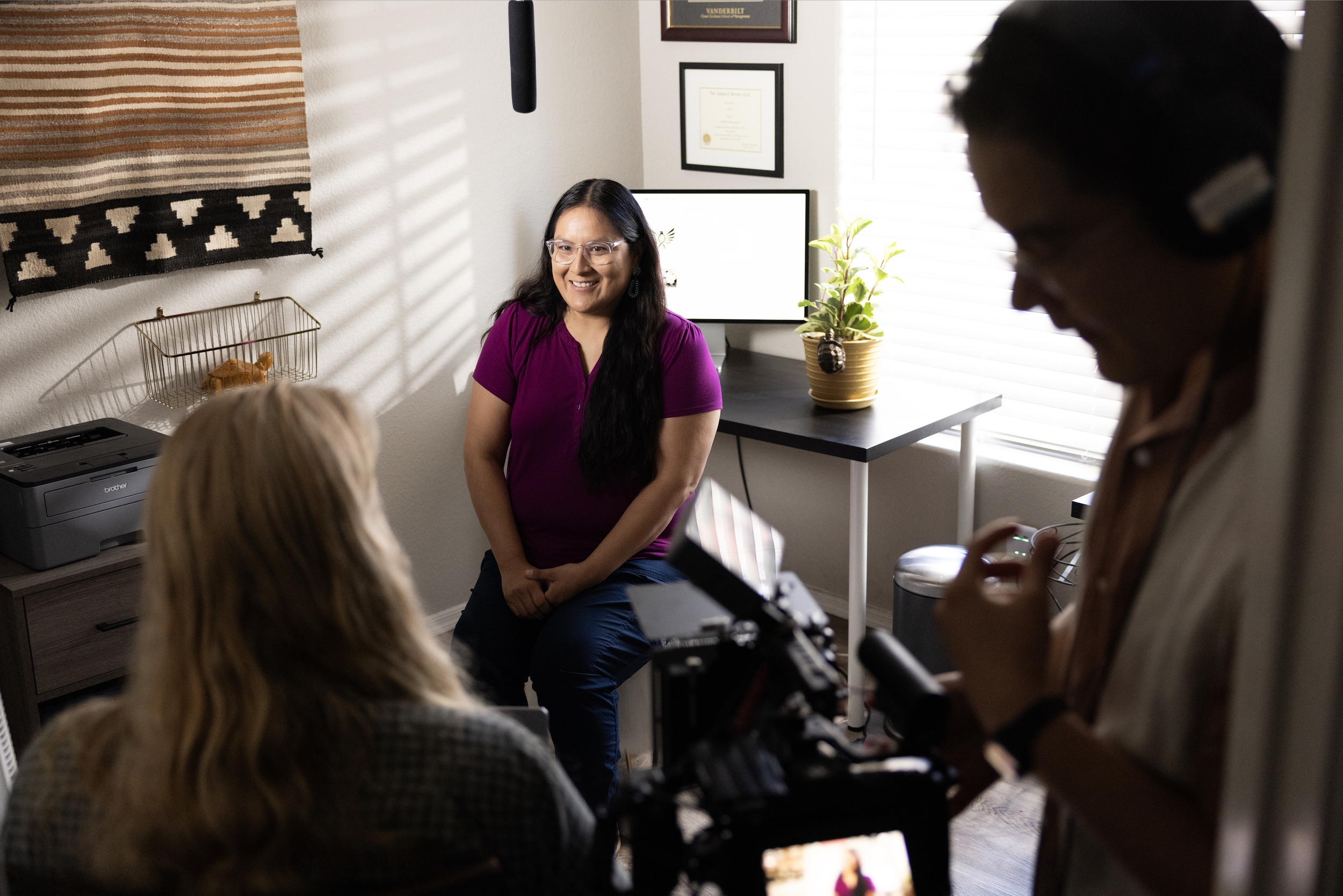
Dr. Krystal Tsosie pictured during a recorded interview, speaking about an ethical way forward for Indigenous microbiome research (watch the interview, part of the Nature story “An ethical way forward for Indigenous microbiome research”).
This work starts upstream. At Arizona State University, the Biodiversity Knowledge Integration Center is working at the level of collections, while the Tsosie Lab for Indigenous Genomics Data Equity & Justice focuses on Indigenous community engagement and governance partnerships before sequencing and AI deployment.
This early-stage design is essential for building trustworthy and sustainable genomics.
What does capacity building look like in practice, not just in grant text?
Ann Pace: A key to effective capacity building is to find out what the community wants, rather than telling them what you think they need. As Western-trained scientists who also understand the importance of traditional land stewardship and ancestral knowledge, we can offer capacity in areas like genomic technologies, but that may not always be the best fit.
Communities might tell you, for example, that the best way to help them build capacity is to support a land back initiative, or to strengthen their capacity to translate conservation of a species or habitat into a viable bio-economic activity, such as in the food sovereignty, agriculture, health, energy, or eco-tourism sectors.
An end goal to strive towards in capacity building is to eliminate the need for external researchers and institutions to be part of the effort—to get to a place where local capacity is sufficient and highly functional.

Ann Pace and Wise Ancestors Media Relations Director Lizzy Baum taking a break from the Society of Ethnobiology Annual Conference at Lake Tahoe, Nevada.