Setting the Vision
Why reference genomes matter.
Before genomes can transform conservation, science, and society, it’s worth asking why they matter at all. In this section, EBP contributors reflect on how biodiversity genomics reshapes our understanding of life on Earth, why reference genomes function as foundational infrastructure, and how success should be measured beyond simple genome counts.
What will biodiversity genomics change about how humanity manages ecosystems?
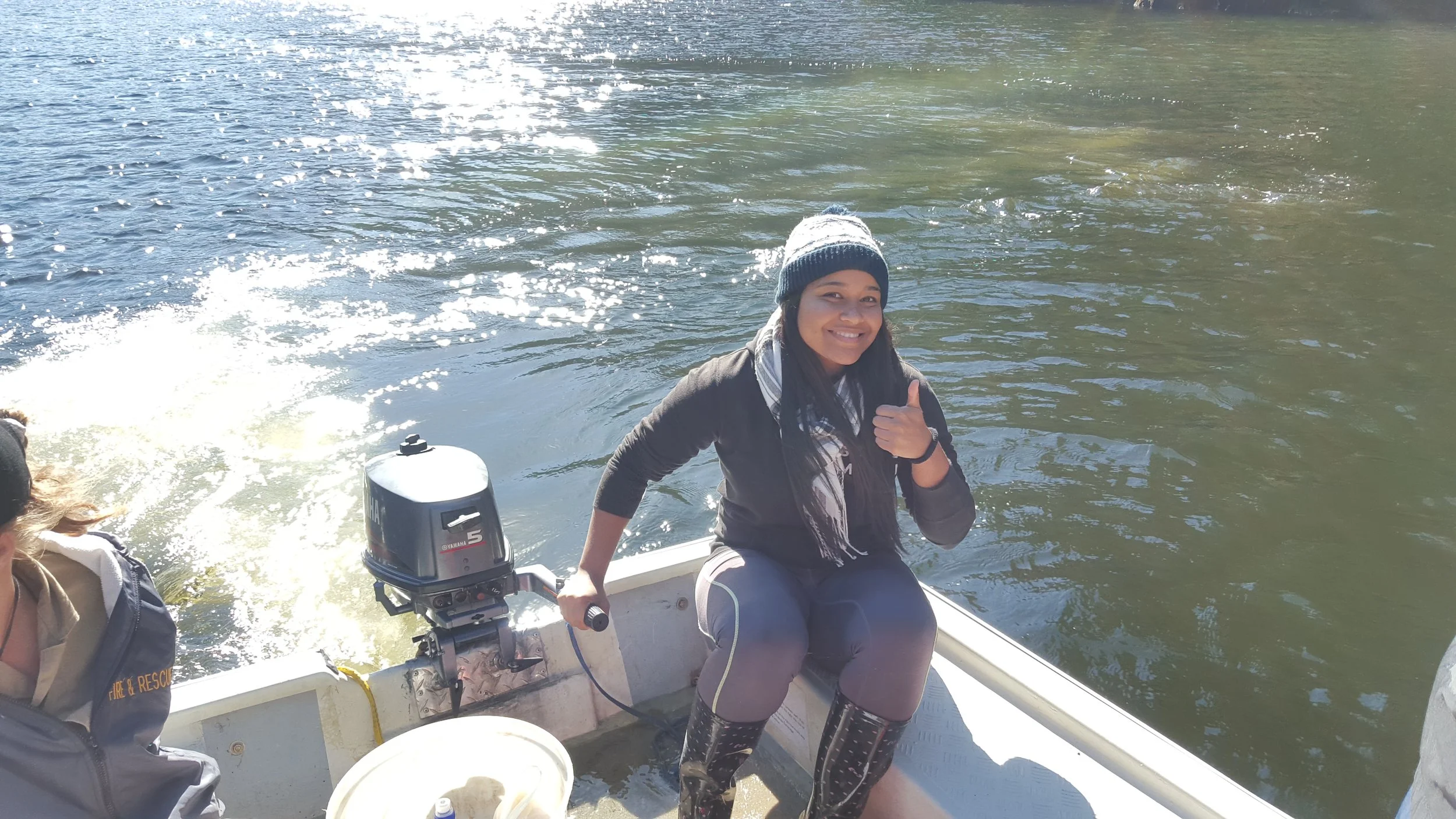
Verena Ras collecting jellyfish in the Keurbooms River along the South African coast.
Verena Ras: Genomics is transforming how we think about conserving nature. For a long time, conservation treated species as single, uniform units. But genomic data is revealing something much more interesting… Different populations of the same species can carry unique traits like increased heat tolerance, disease resistance, or special life-history strategies, that aren’t visible just by looking at them. Protecting these unique lineages means we are safeguarding future resilience, not just counting species or focusing on the most charismatic organisms. Genomics also makes changes in ecosystems easier to track. By looking at DNA, we can detect population declines earlier, check whether restored habitats are actually rebuilding genetic diversity, monitor how organisms move across landscapes, and even trace illegal wildlife harvesting through genetic signatures. For the first time, we are beginning to “see” biodiversity with the same resolution at which evolution actually happens i.e., across space, over generations, and in the traits that matter for survival. The "big shift" is that biodiversity will become a strategic knowledge resource that informs land-use decisions, climate adaptation, ecological restoration, financing strategies, and long-term policy design. It moves conservation from reacting when things go wrong to proactively protecting nature’s ability to adapt, helping ensure ecosystems remain resilient.
Why are genomes foundational “infrastructure,” like maps or weather satellites, rather than just biological curiosities?
Mark Blaxter: Archimedes wrote “Give me a lever long enough and a fulcrum on which to place it, and I shall move the world”. A good reference genome is like this fulcrum, a fixed, reliable point from which we can apply all our detailed post-genomic tools (our “long levers”) to move the world. Genomes come in a range of qualities (contig, scaffold, chromosomally-complete, T2T) and the further we can move along this spectrum, the more universal, the more fixed our fulcrum, for all future work.
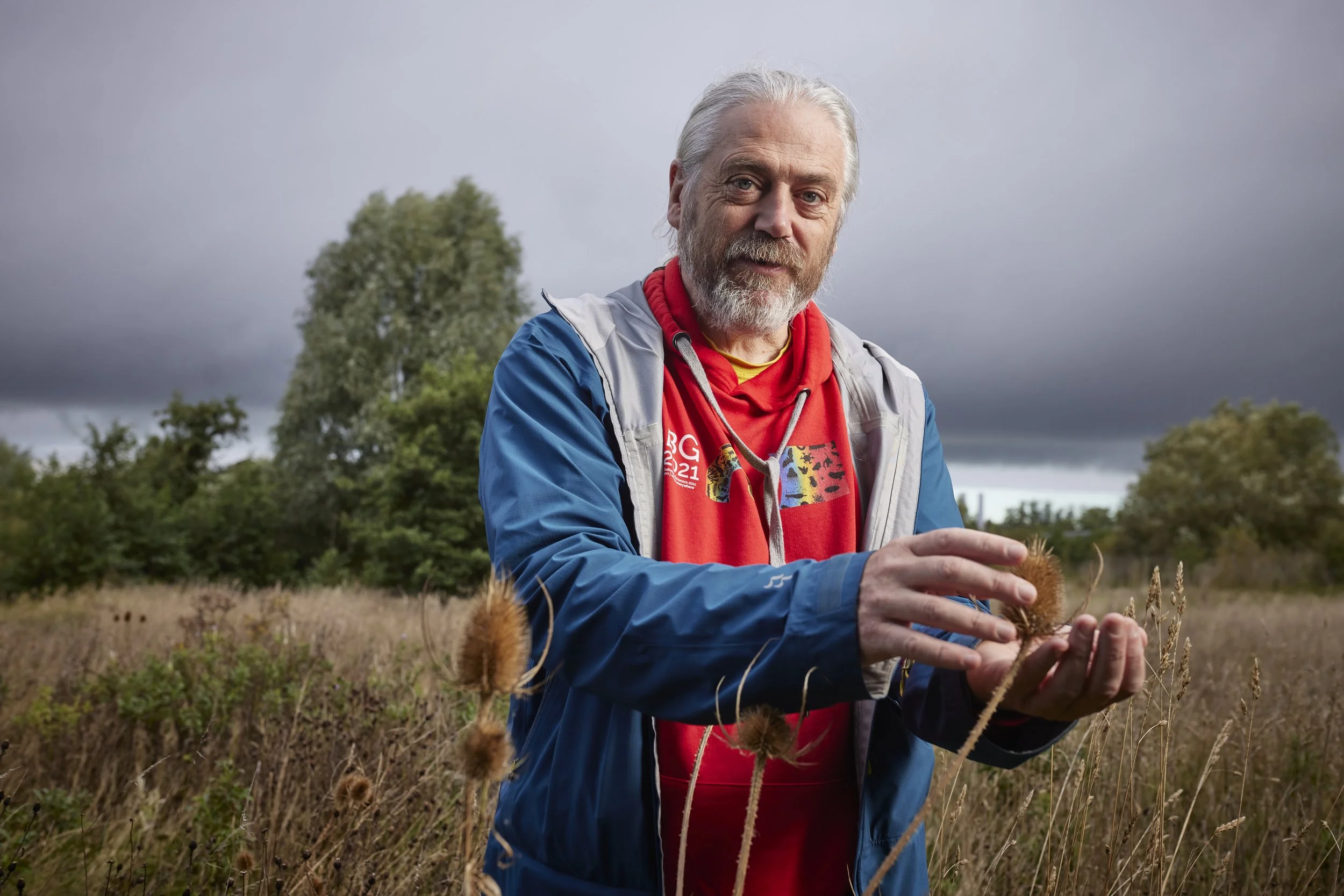
Mark Blaxter samples a teasel head for spiders and earwigs in the wetlands beside the Wellcome Sanger Institute.
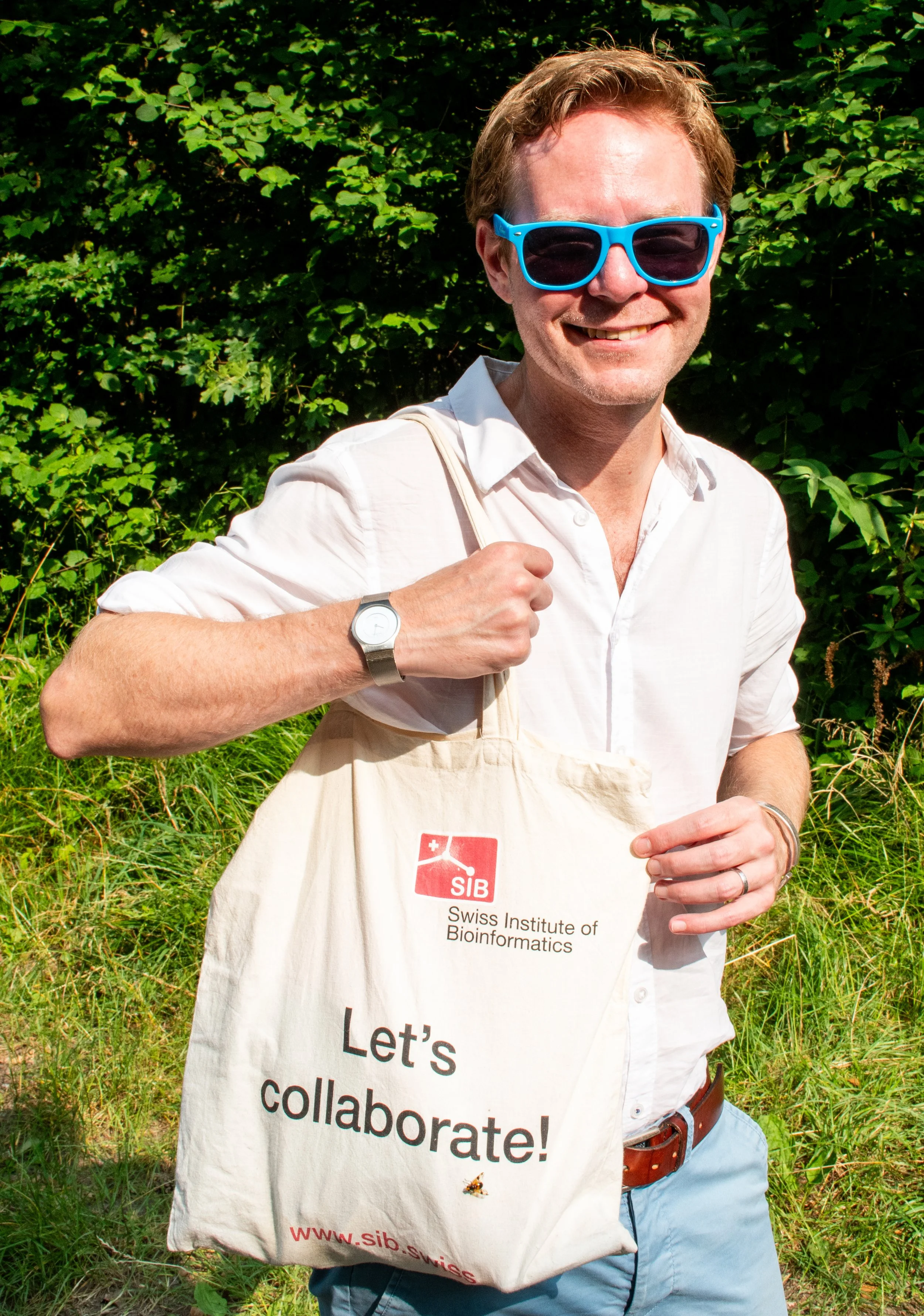
Rob Waterhouse sampling Lopinga achine (the woodland brown butterfly) in the Canton of Valais, Switzerland, as part of efforts to generate high-quality reference genomes for European biodiversity.
How do we measure success beyond counting genomes?
Rob Waterhouse: Success is measured not only by the number of genomes sequenced but by the lasting scientific, ethical, and societal value of the resources created. Central to this is genome quality, prioritising chromosome-level, well-annotated, and well-documented assemblies that are truly usable for research. Equally important is phylogenetic breadth, ensuring that genomes represent the full diversity of eukaryotic life, including understudied and hard-to-sequence lineages. Success also depends on shared standards and reproducibility, with open, FAIR data and transparent pipelines that allow genomes to be compared, reused, and improved over time. Part of successful delivery includes global equity and capacity building, aiming to involve scientists and institutions in biodiversity-rich regions, respect legal and ethical frameworks, and promote fair benefit-sharing. Beyond sequencing, genomes are considered impactful when they are actively integrated into research and practical applications. Success is also measured through conservation and societal benefits, such as informing biodiversity protection and supporting applications in agriculture, medicine, and environmental change.
Why should genome sequences be considered a shared heritage of life on Earth?
Mark Blaxter: There is a somewhat famous idea that emerged from discussions of human rights in our interconnected world in the 1970s: “Our lives are connected by the common thread of humanity. If we break it, we are all undone.” John Sulston and Georgina Ferry used this idea—the common thread—as the title of their book on the sequencing of the human genome, emphasizing that the human genome sequence is part of the heritage of all humanity.
The Earth BioGenome Project proposes the sequencing of all life—sequencing the common thread that connects us, humans, to the entire biosphere. In these sequences are encoded not only the amazing, unique features of each species, but also the deep connections between all species: the record of more than three billion years of life on our shared planet. The sequences of life are thus a common heritage of us all, which we hold in trust for all other species.
Linnaeus, and the busy community of Linnaean taxonomists in the 300 years since, published a catalogue of the names of life, with brief descriptions. Until now, this catalogue has been for an imaginary library—it has not been possible to go to the Linnaean librarian and ask for the book of the badger, the lily, or the puffball mushroom. The many affiliates of the Earth BioGenome Project are now putting the books of life on the shelves of the Linnaean library. Importantly, by assuring open access, the library is open to all: there are no limits on how many books you can take out at once, and more than one person can read the book of the badger at the same time.
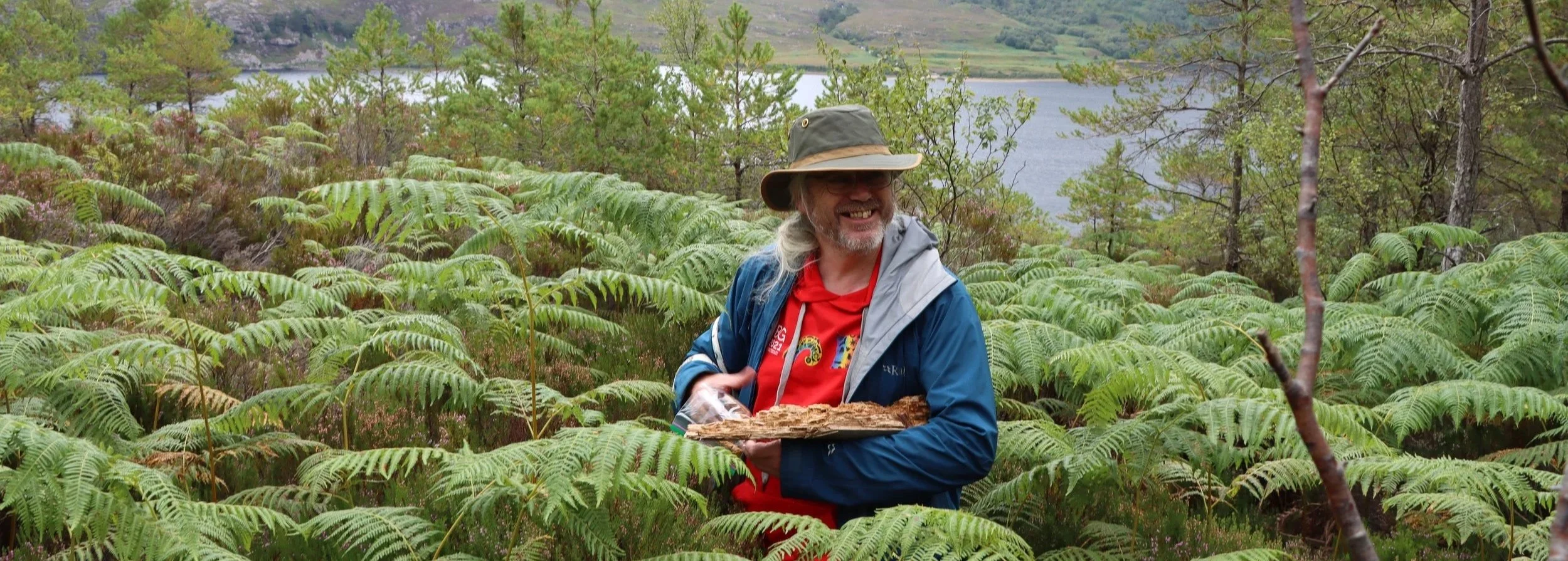
Mark Blaxter, happily lost in a hillside of bracken at Beinn Eighe National Nature Reserve in northern Scotland during a Darwin Tree of Life collection trip.
Like all good libraries, the value of the library of life will only grow as more books are donated and its shelves fill up. The wealth of each genome sequence can be realised through understanding the unique species it represents, and this value is multiplied by the unveiling of the common threads found in similarities between genomes. If each genome is a map of the exciting and curious places one species has travelled through on its evolutionary journey, imagine the journeys possible once we have all the maps.