The role of global collaboration
Difficult genomes are rarely solved by one team alone. They require field expertise, laboratory innovation, sequencing capacity, bioinformatics, taxonomic knowledge, and shared standards working together across institutions and regions. In this section, EBP contributors reflect on how global collaboration turns isolated challenges into shared progress—and why solving one hard genome can help unlock many more.
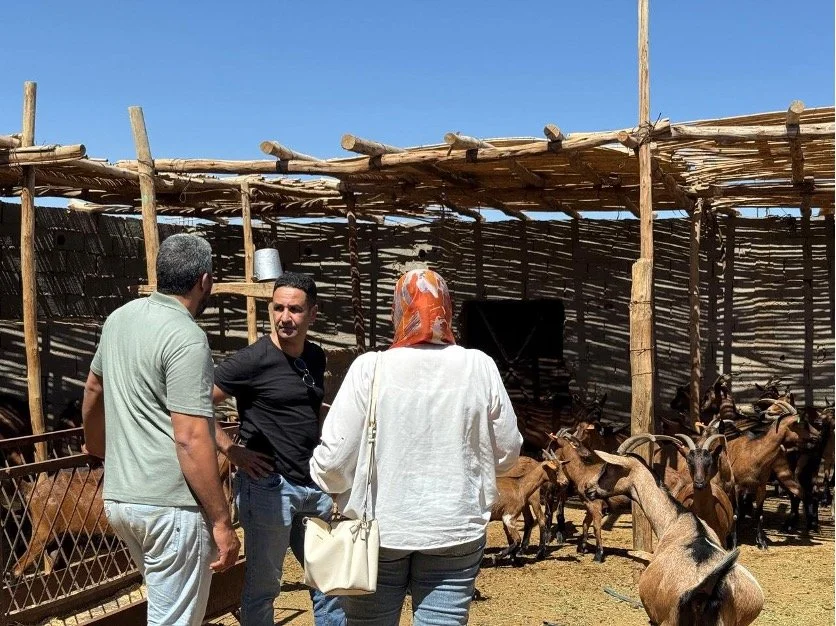
Bouabid Badaoui on a field visit to local goat systems in southern Morocco, discussing sampling strategies with breeders and team members. Community engagement and local expertise are central to the Africa BioGenome Project’s approach.
What has the EBP network enabled that would be difficult — or impossible — to achieve alone?
Bouabid Badaoui The Earth BioGenome Project has fundamentally changed what is possible by connecting expertise, infrastructure, and vision across continents.
In Africa, through the Africa BioGenome Project, we are working to generate genomic resources for species that are ecologically, economically, and culturally essential, yet historically underrepresented in global genomics efforts. Our work on camel and goat genomes in desert regions is a clear example: it combines local knowledge, field access, and emerging sequencing technologies.
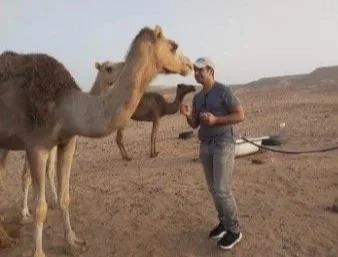
Bouabid Badaoui interacting with camels during fieldwork in southern Morocco, illustrating the integration of traditional husbandry knowledge and scientific sampling in arid ecosystems.
This type of work cannot be done in isolation. It requires coordination between field teams, sequencing platforms, bioinformatics expertise, and international collaborators. The EBP network enables this integration, allowing us to move from isolated efforts to a coherent global strategy.
"Africa is not only a source of biodiversity — it is a driver of innovation in how we study and understand life in extreme environments."
More importantly, it ensures that Africa is not only a source of biodiversity but also a driver of innovation in how we study and understand life in extreme environments.
Have collaborations ever unlocked a genome that felt impossible to tackle within a single lab?
Have collaborations ever unlocked a genome that felt impossible to tackle within a single lab?
Kamil Jaron: In the past, any genome was impossible to tackle within a single lab simply because of resources and expertise was needed to make one, so collaboration was truly essential. Today, that bottleneck has shifted. Individual genomes are routinely generated within labs, but what still feels impossible without collaboration is producing high-quality genomes across thousands of species.
The scaled-up genome production we do at the Tree of Life programme depends heavily on collaboration — particularly for sample acquisition and sometimes for interpreting genomes we need taxonomic experts. In that sense, collaboration no longer unlocks individual genomes, but makes large-scale, systematic sequencing possible.
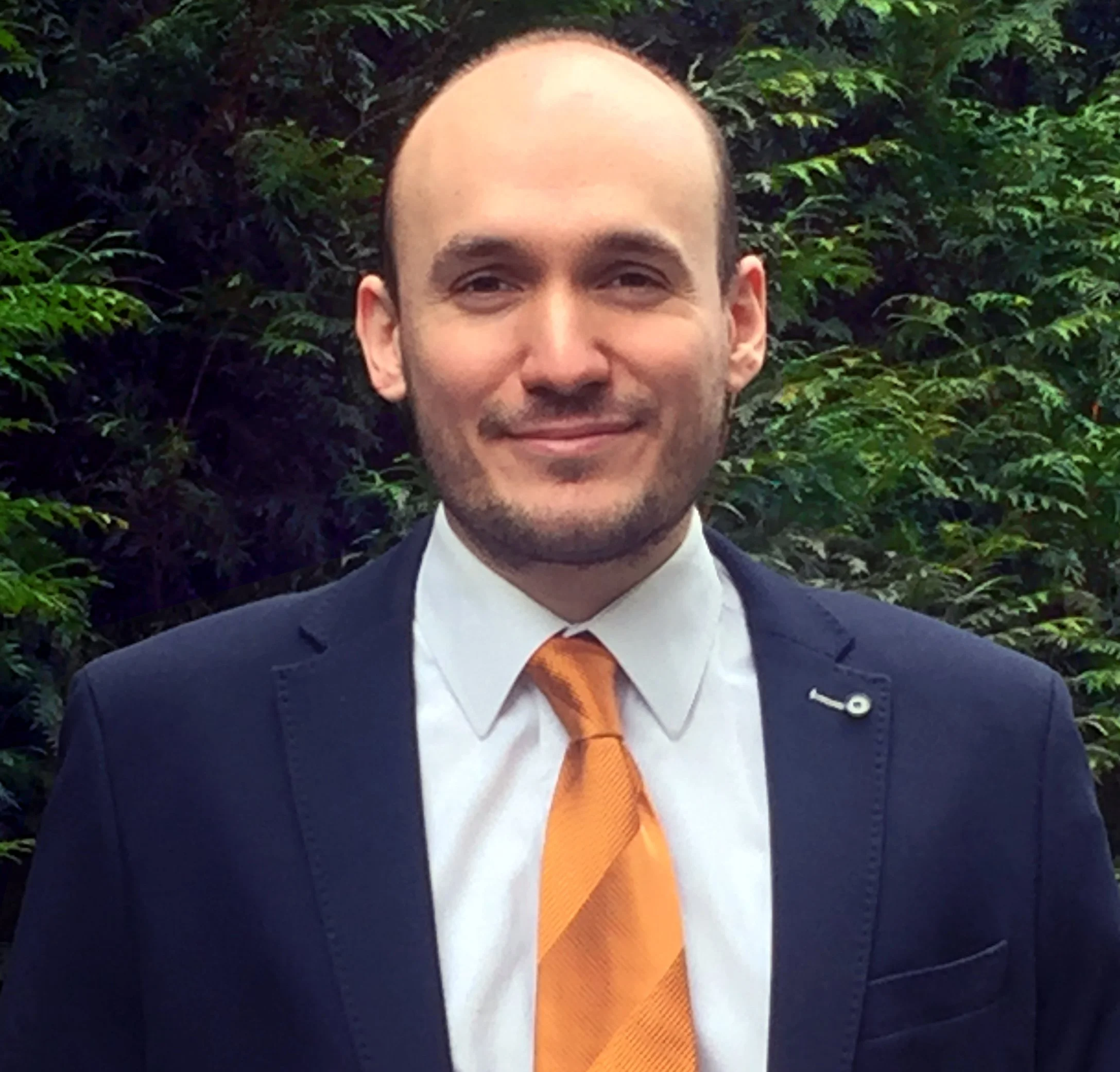
Giulio Formenti is a Research Assistant Professor at The Rockefeller University, Co-Director and Bioinformatics Lead of the Vertebrate Genome Laboratory, and Chair of the Assembly Group for the Vertebrate Genomes Project (VGP).
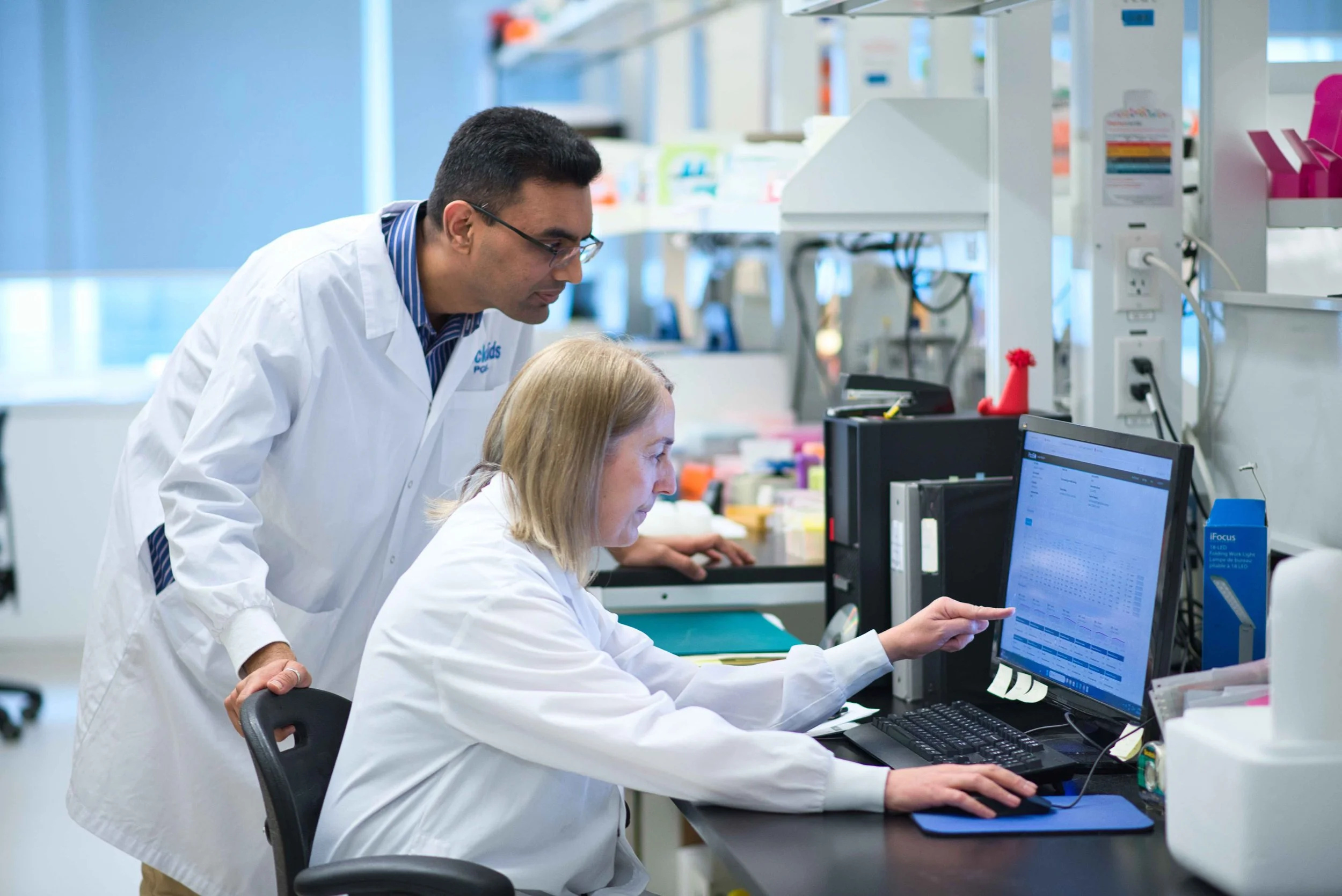
Tara Paton (seated) and Sachin Desai (standing) monitor a sequencing run, tracking flow cell occupancy, data output at key time points, and DNA fragment length. Team members not pictured: Lan He, Sanjeev Pullenayegum, and Karen Ho.
Can you recall a moment when a “hard” genome finally came together?
Tara Paton: It is always top of mind for us how precious the samples we receive are. They may be from a species that is endangered or threatened, a biologist may have had to go to extraordinary lengths to collect the sample, or the specimen has very little material to start with. Further, many species have special significance to the communities to which they belong. We have all heard the term “personalized medicine” and for this project, we really are doing “personalized sequencing”! Each DNA sample is examined carefully before any experiments are started. The questions we might ask are: How much DNA is there? What is its quality/size? Are there known issues with the specimen's collection or storage? What are the sequencing goals? Is the organism's DNA possibly refractory to sequencing, such as plants or marine organisms? Considering these factors, the lab can formulate a plan for each sample that will maximize data acquisition success.
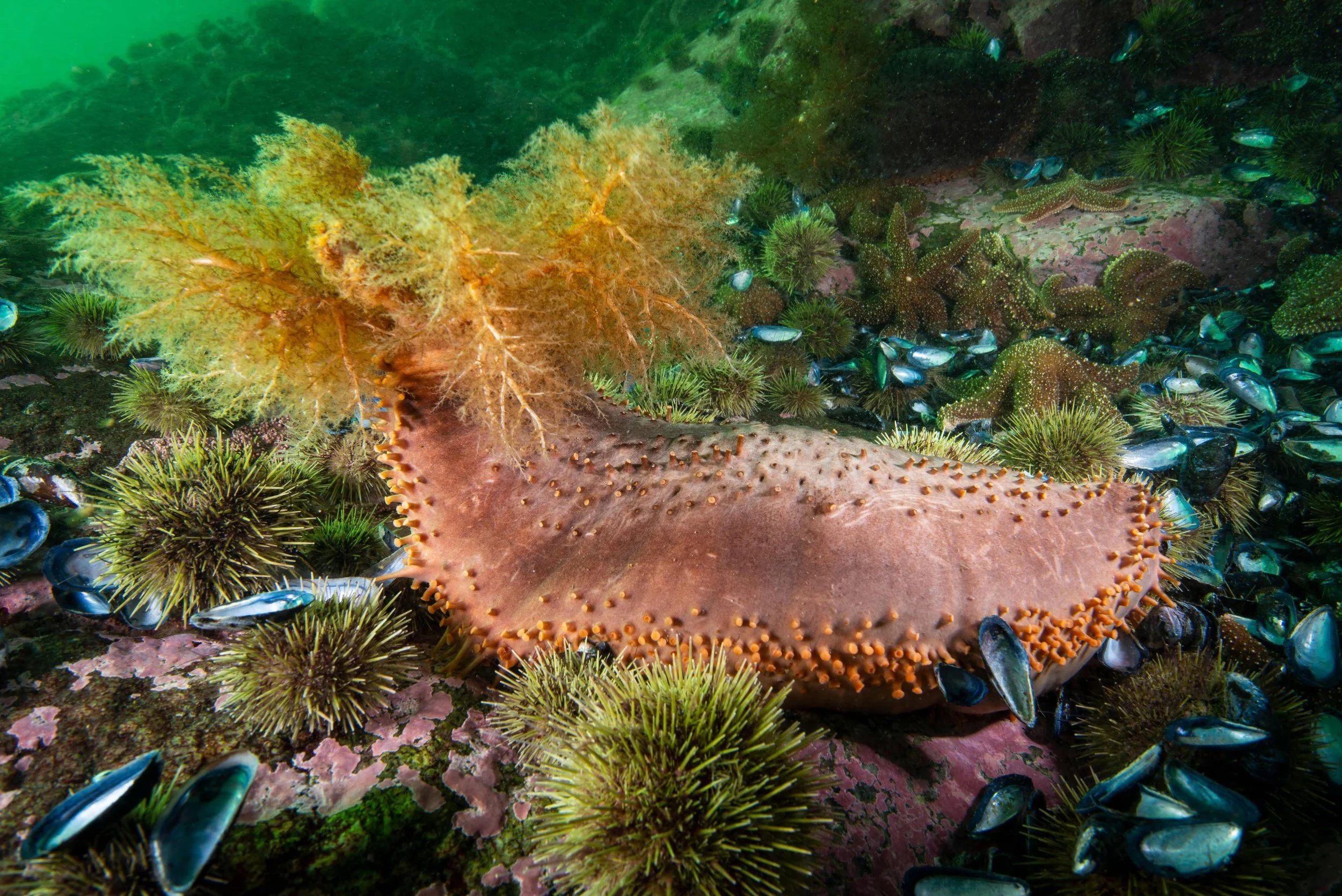
Orange-footed sea cucumber (Cucumaria frondosa) on the floor of the St. Lawrence River. Sequencing this species required the development of new DNA-cleaning approaches after initial sequencing attempts produced almost no usable data.
A species that stands out for us in terms of a technical breakthrough would have to be the orange-footed sea cucumber (Cucumaria frondosa)! It was one of those DNA samples where the library preparation seemed to go perfectly well, but produced almost no sequencing data at all. It was early in the project and we had not encountered a sample like this before. Through an iterative process of DNA cleaning methods using a new sample, we finally generated sequence and I nearly danced through the lab with joy! Since then, we have refined the method to preserve the DNA length as much as possible and we are very happy with the results. We have made similar breakthroughs with other marine organisms, plants and some insects. We have exceptionally talented laboratory staff who work tirelessly to produce quality data for this project and I am very proud of them. Some specimens continue to challenge us and I have no doubt that our toolkit for dealing with them will continue to grow.
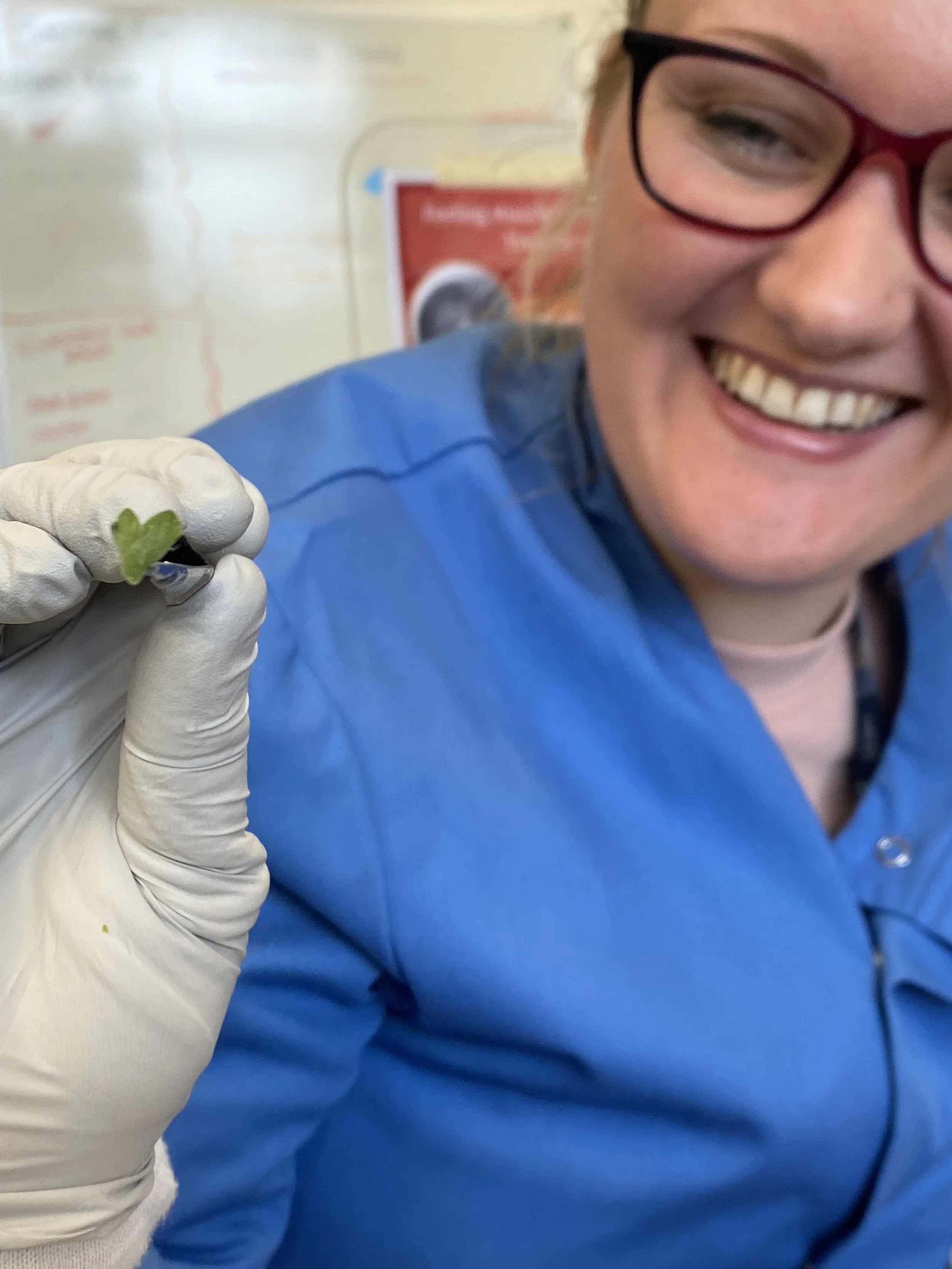
Amy Denton:
How important is persistence in this line of work?
Amy Denton: Persistence is very important, but patience is also very important, as often it can take time for difficult genomes to be completed! In my four years working in the Tree of Life Core Laboratory, being persistent and not giving up on samples had enabled several breakthroughs and the generation of several genomes we wouldn’t have thought possible a few years ago, but being patient has made sure I have made the right decisions on how to progress samples. Sometimes for a species you might need to just try a different tissue type to get the DNA needed for reference genome generation, or other times you might need to wait until there are developments in the sequencing technologies available. Sometimes the development of a new protocol for another difficult species can also benefit another – the Modified Omega Bio-Tek protocol was initially developed for high molecular weight DNA extraction of jellyfish, however we have also found it has helped extract HMW DNA from other metazoa species such as the acorn worm Sacroglossus kowalevskii which had been in R&D for three years! I’m hopeful that remaining both persistent and patient will enable me to continue to make breakthroughs like this and enable reference genomes of difficult species to be generated in the years to come.